
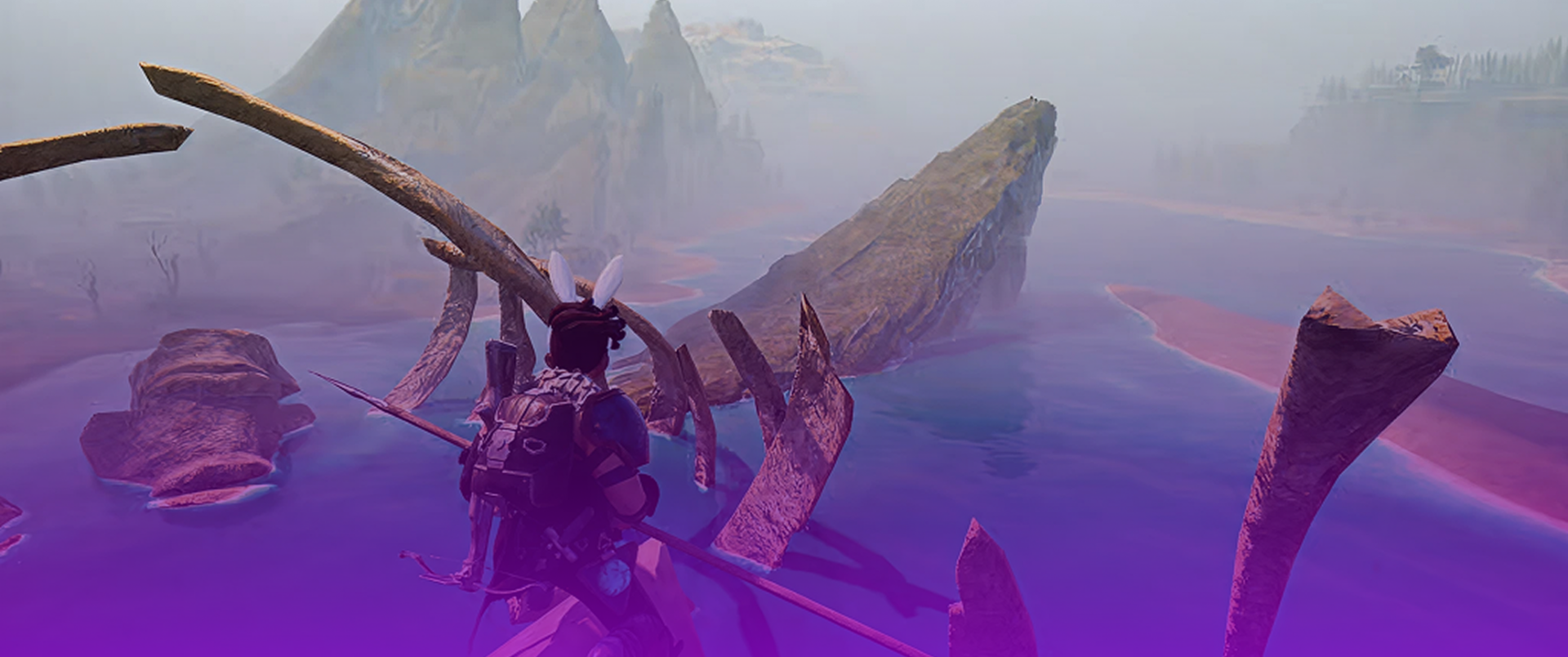


When you first wake up on the Plateau of Beginnings, the Palpagos Islands feel massive. You look at a mountain in the distance and wonder if you can actually reach it. In Palworld, the answer is almost always yes. But for those planning a long-term server or building a massive guild base, just feeling large isn’t enough, we need to understand the actual technical limits of the map.
It isn’t just about the scenery, it’s about the X and Y coordinates, the altitude limits, and how much data a server has to track. We have analyzed the map grid and the game’s engine to give you the definitive guide on exactly how big Palworld is.
The Horizontal Grid
Unlike games that generate a random, infinite world every time you play, Palworld uses a handcrafted, static map. This is a huge benefit for server stability because the land is always in the same place. To measure it, we have to look at the in–game coordinate system.
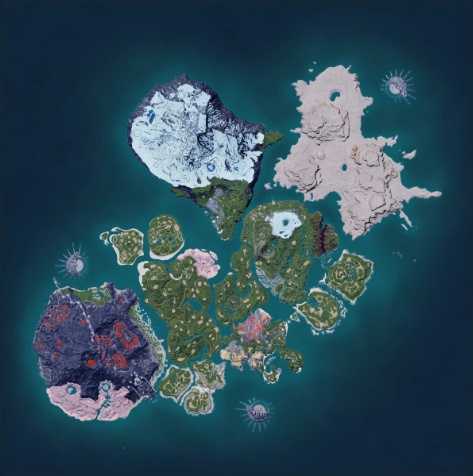
The Math of the Palpagos Islands
If you open your map, you will see coordinates in the bottom corner. The playable world currently sits within a grid that stretches roughly from -800 to +800 on both the X and Y axes.
When you calculate the distance across this grid and account for the land you can actually walk on, the area covers about 16 to 20 square kilometers.
To put that into a perspective that actually matters for your gameplay, here is how long it takes to cross that distance:
- Running on foot: About 45 to 60 minutes if you go in a straight line without stopping.
- Using a mid-tier flyer(Nitewing): Roughly 18 minutes.
- Using the fastest flyer(Jetragon): You can cross the whole map in about 8 to 10 minutes.
The World Border:(“The Red Wall”)
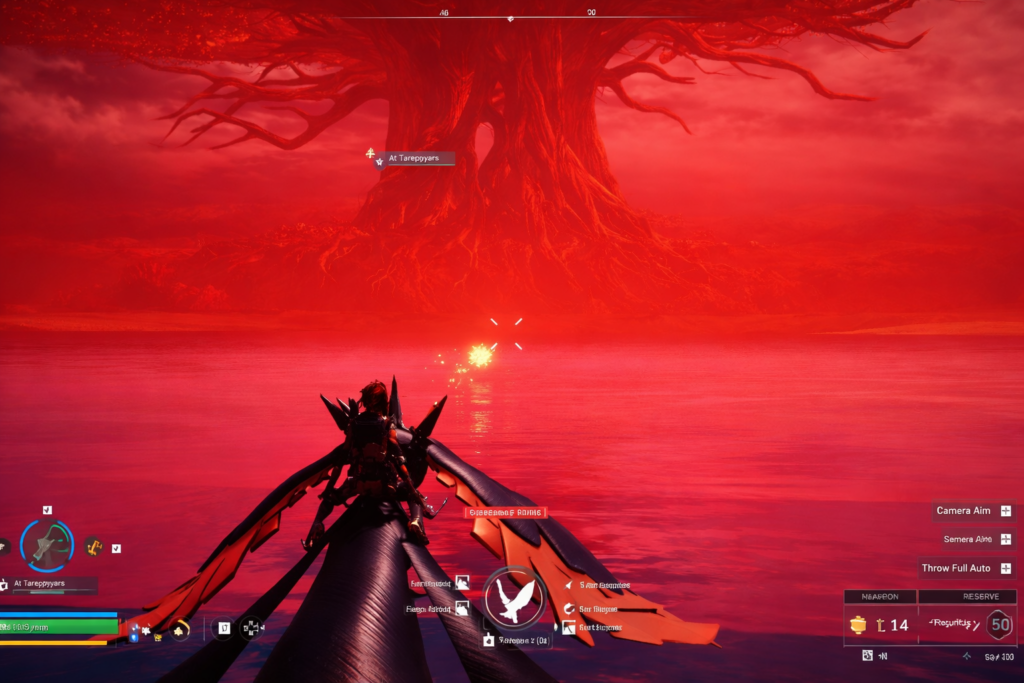
Every map has a limit, and in Palworld, it is the Red Shimmering Wall out in the ocean. This isn’t just a visual border, it is a hard physics barrier. You cannot sail past it, and you cannot fly over it.
Moving the Boundaries
However, this border is not permanent. During the Sakurajima update, the developers physically pushed this red wall further out to make room for the new island.This proves that while the map has a limit right now, the grid is designed to grow. The ocean is essentially a giant placeholder for future updates.
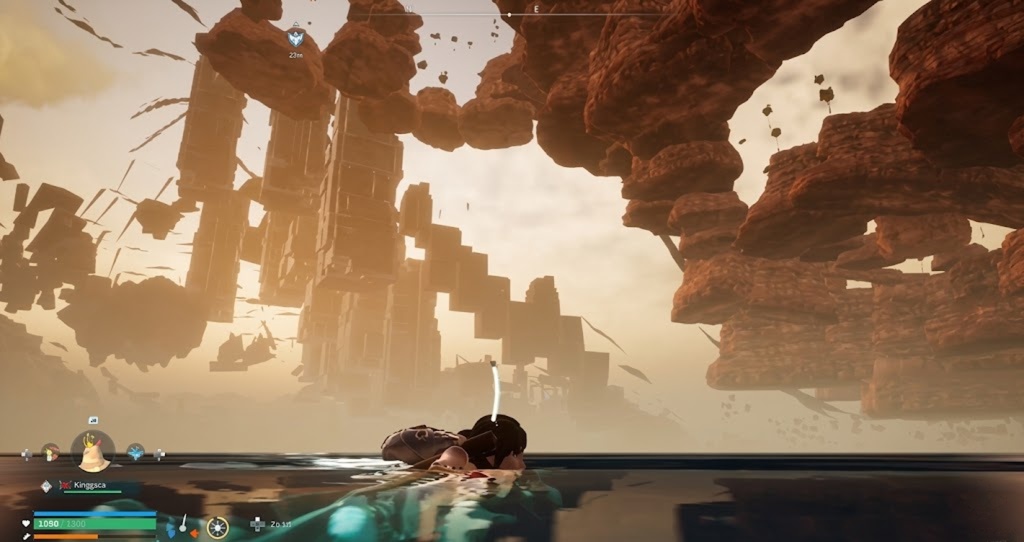
When we look at the raw game files, the actual “coordinate space” available in the engine goes much further than -800. The engine could technically support a map four times this size before hitting “floating point errors” which is when the game starts to glitch because the numbers are too high. The image below shows how the world glitches when your CPU lags, causing “world holes” and unloaded terrain during travel.
Altitude and Vertical Space
Most people make the mistake of looking at the Palworld map like a flat 2D image, but that’s not how the game actually plays. The verticality of the Palpagos Islands is just as big a deal as the horizontal distance. You aren’t just moving across a grid, you’re constantly scaling massive mountains or diving into underground dungeons.
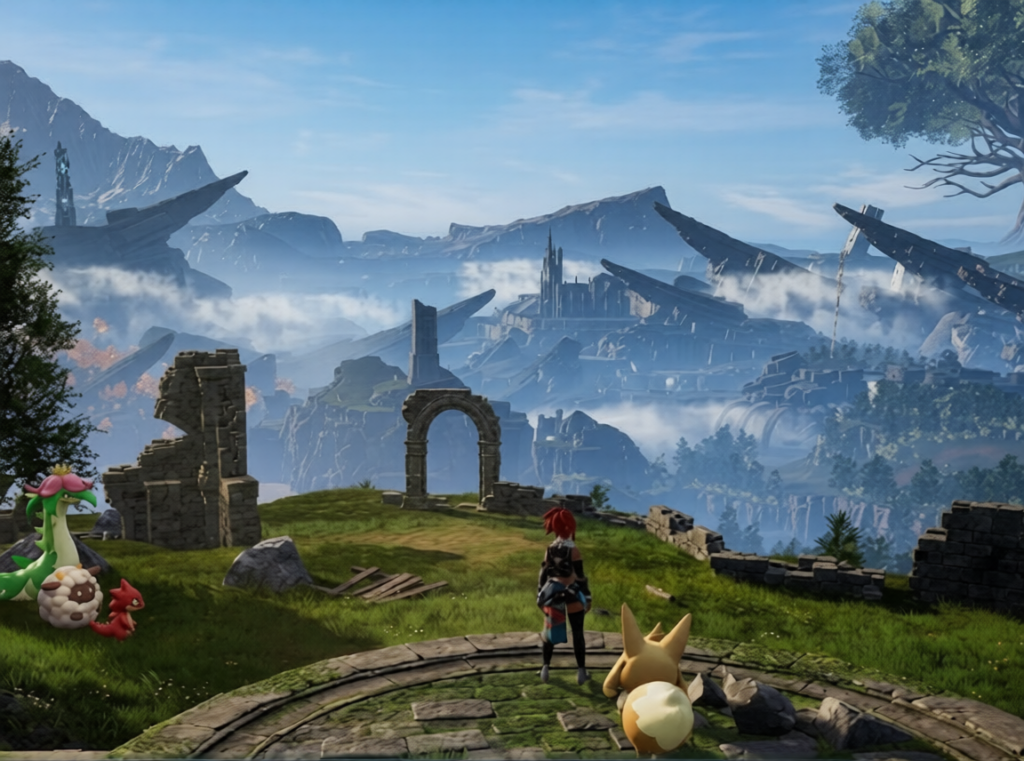
This vertical design changes everything from where you decide to build a raid-proof base to how you navigate the terrain. For a server, this 3D layout is a lot more expensive to handle than a flat map. Tracking a player flying at the map’s ceiling while another is exploring a cave at sea level, the server simply manages these multiple elevation layers simultaneously to keep the world synced for everyone.
The Sky Ceiling
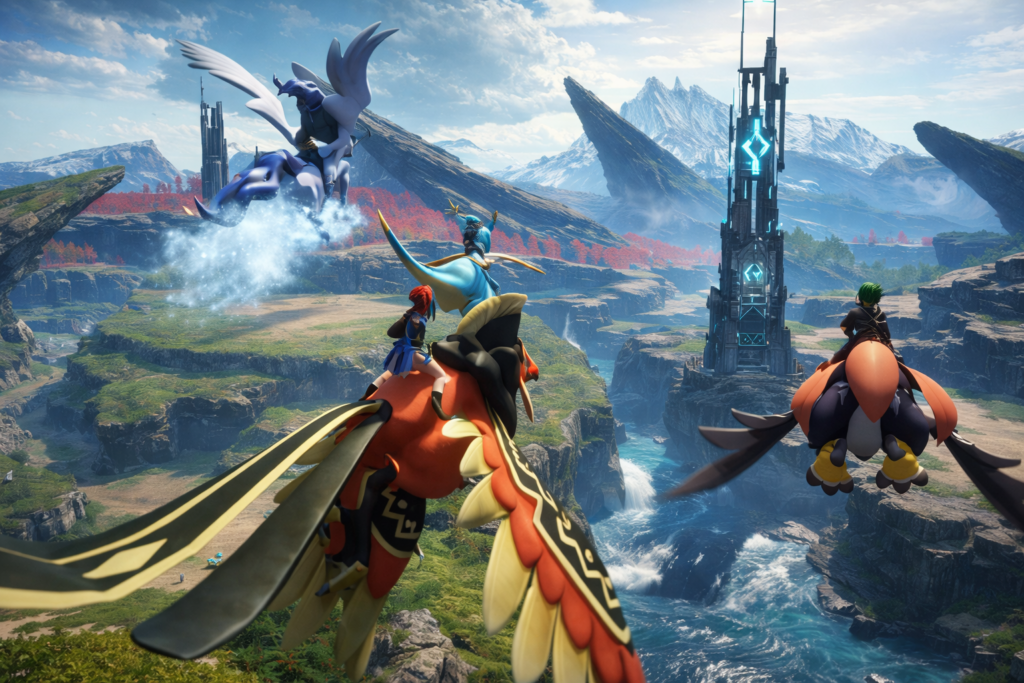
You can fly thousands of units above the tallest peaks in the Astral Mountains. A large part of the playable space actually comes from this vertical depth. It allows players to build “layered” bases or fly high enough to avoid ground-based raids entirely.
Dungeons and Hidden Areas
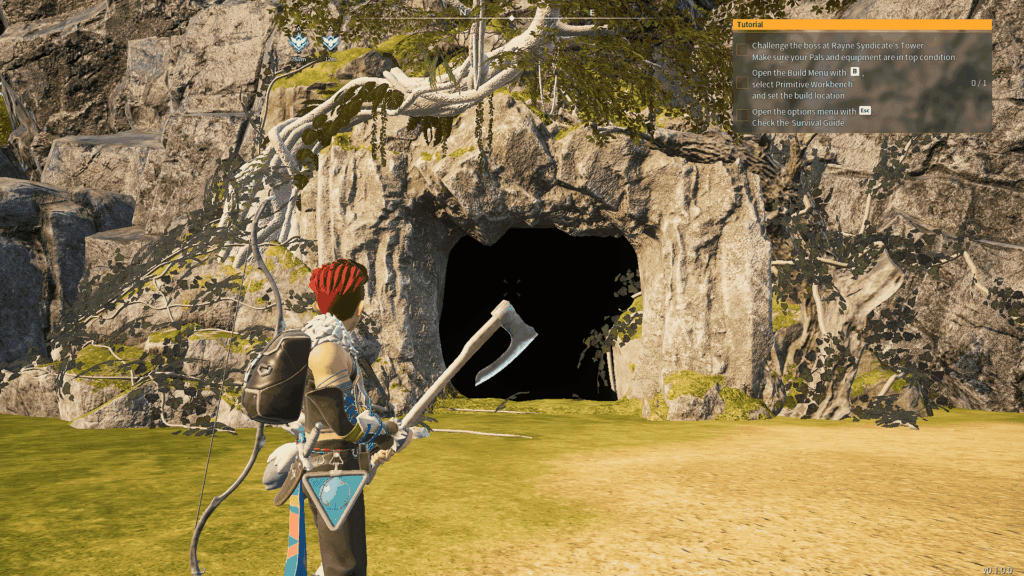
Then you have the Dungeons. When you walk into a cave, you aren’t just in a hole in the ground, you are being teleported to a separate “cell” that exists outside the main map grid.
There are currently over 100 dungeons and boss arenas. Each one adds roughly 500 to 1,000 square meters of playable floor space .If you were to flatten all of those out and put them next to the main islands, the total playable area of the world would jump by about 25%.
Biome Breakdown
While the physical map stays a fixed size, the feel of that space changes completely depending on which biome you’re standing in. In game design, we talk about density–how much stuff is packed into a single square kilometer. This is why a short trip through the woods can feel like a trek, while a flight across the desert feels like a breeze.
The Forest Region
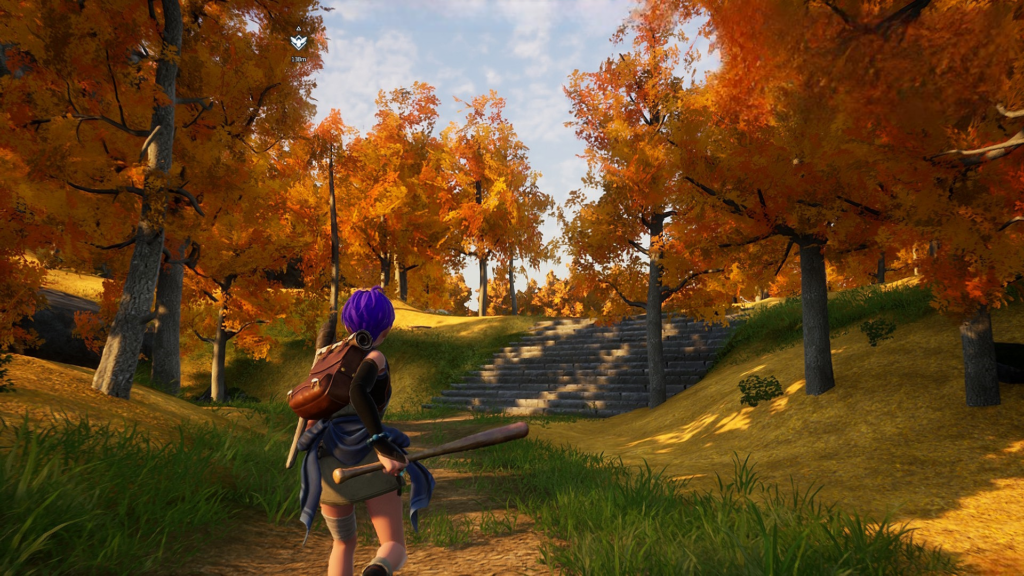
This is the starting zone, and it is the most “cluttered” part of the map. It has the highest density of trees, rock and Pals. For a server, this is a “heavy” zone. Even though it isn’t the largest area, it requires the most processing power because there are so many small objects to track.
The Sand Dunes
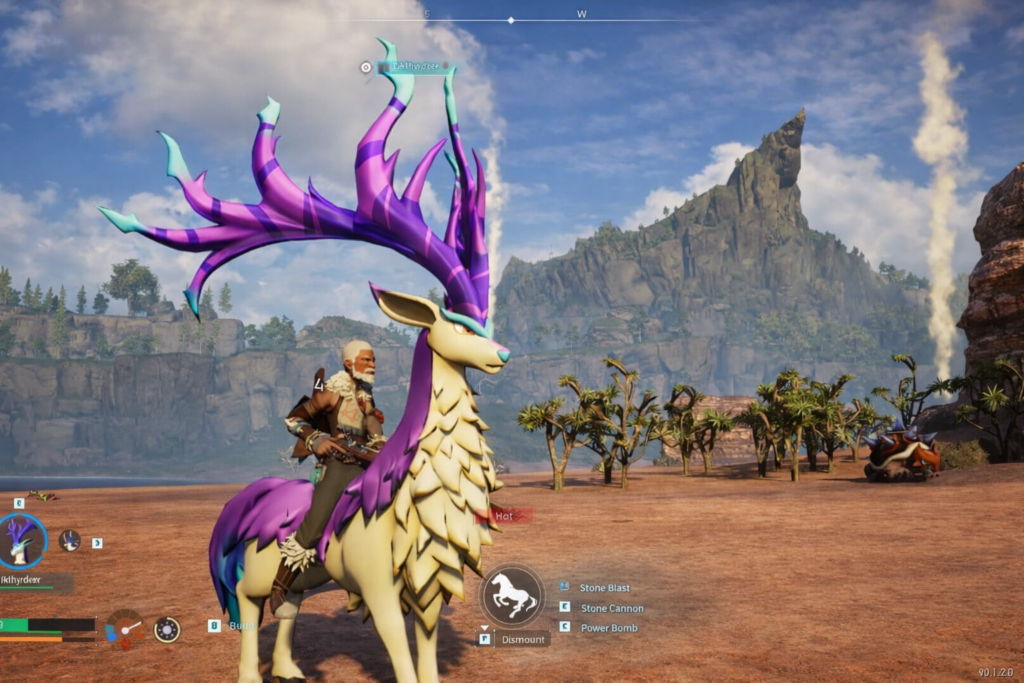
The desert feels like the largest biome because of the lack of landmarks. It is wide-open and flat. On a technical level, this is a “light” zone for a server. Since there are fewer environmental assets like trees, bushes, and complex structures to render, the server has significantly less data to process in real time, allowing players to move through the area more quickly and smoothly with minimal risk of lag.
The Tundra Peaks
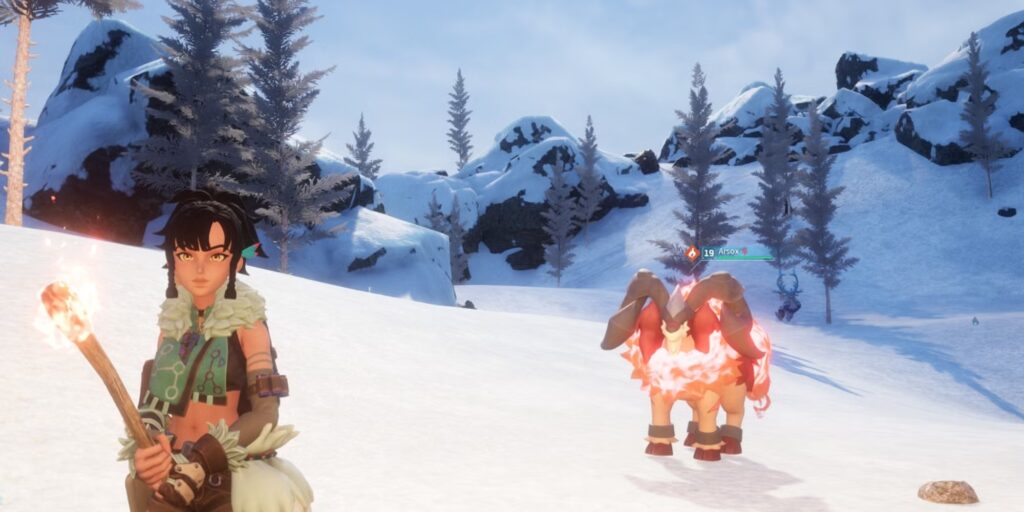
The Tundra is all about verticality. It is the tallest point on the map. Because you have to fly “up” so much, it takes longer to navigate than the desert, even if the flat distance is the same. This is where the 3D nature of the map really shows its scale.
How Palworld Compares to Other Games
To see where Palworld stands, we have to look at how it stacks up against other giants in the survival genre.
| Game | Map Type | Approx. Size |
| Palworld | Hand–crafted | 20 km2 |
| Rust | Procedural | 16 km2 |
| Skyrim | Hand-Crafted | 37 km2 |
| ARK: The Island | Hand-crafted | 48 km2 |
| Minecraft | Procedural | 3,600,000,000 km2 |
While Palworld is technically smaller than survival giants like ARK or the literally world-sized Minecraft, it focuses on density. In a game like Minecraft, you can travel for miles across mountains and plains that look exactly the same because they are generated by an algorithm.
If you want to understand how world generation works in detail, check out this guide on Minecraft terrain.
In Palworld, every square meter is built with a purpose. Every 100 meters has a specific Pal spawn, a hidden chest, or a resource node placed there by a designer. This density is what makes those 20 km2 feel much larger and more rewarding than a vast, empty landscape.
Why Map Size Matters for Your Server
This is the part that really matters if you are using Cybrancee or other hosting service. The size of the world is directly tied to how much RAM your server uses.
The Challenge of Player Spread
In a solo world, the game only has to load the area around you. But on a 32-player server, everyone is spread out.
- If one player is in the Snow Mountains (-700) and another is in the Volcano (+700), the server has to keep both of those biomes active in its memory at the same time.
- The more players you have exploring different corners of the map, the more RAM your server needs to track all those Pals and dropped items. If you’re planning to host a full world, the recommended RAM for 32 players is at least 16 GB to 32 GB. This ensures the server can handle several high-density biomes simultaneously without lagging or desyncing your progress.
The Role of NVMe Storage
As players explore more of the map, your server’s save file gets bigger. Every chest opened and every tree cut down has to be recorded. In a world this size, you need NVMe storage (which we use at Cybrancee) to make sure the server doesn’t “stutter” every time it runs an auto-save.
Environment Scaling
In Palworld, size is also about difficulty. We call this “Environmental Scaling.” Because the map is divided into extreme temperature zones, you cannot move across the map in a straight line without the right gear.
If you are flying to the Astral Mountains without cold-resistant armor, you will take damage. This forces players to take longer, indirect routes, which makes the 20 km2 feel twice as large as it actually is. It turns a 10-minute flight into a 20-minute mission of survival.
Unreal Engine 5 and Performance

Palworld uses a feature in Unreal Engine 5 called World Partitioning. This is what allows the map to be 20 km2 without any loading screens.
How World Partitioning Works
The map is a giant grid of “cells”. The server only loads the cell you’re currently standing in. When you move, it has to quickly stream in the next area and unload the one you just left. On a dedicated server with 32 players, this is happening 32 times at once. If everyone is in a different spot, the CPU has to work incredibly hard to keep up with all those transitions.
This is why high CPU clock speed is more important than having a lot of slow cores. If the processor can’t handle those cell handoffs fast enough, you’ll see world holes where the ground hasn’t loaded yet, or Pals that take a few seconds to actually appear.
Conclusion
Palworld’s map isn’t procedurally generated, it’s a hand-crafted world covering about 16 to 20 km2. While that might sound small compared to some massive RPGs, the coordinate grid actually hides a lot of depth. Between the vertical mountains and the 100+ hidden dungeons, there’s way more playable space than the flat map suggests.
In reality, the size of the world depends on how you move through it. Crossing the islands on foot feels like a massive journey, but once you unlock a fast flyer like Jetragon, the world starts to shrink.
That’s why having a stable server setup matters more than the actual map size. A reliable host like Cybrancee can help keep everything running smoothly, even when your world starts getting crowded.
Looking for a reliable host for your Palworld server? Cybrancee offers powerful, affordable hosting designed for smooth and lag-free gameplay.