

When you think of Terraria, you think about freedom, exploring, building, crafting, and fighting your way through fierce enemies and powerful bosses. As players progress, they discover new weapons, armour sets, and several accessories that allow them to enhance their combat style.
Unlike many role-playing games, Terraria doesn’t have any formal class selection or a leveling system. Instead, your class is determined by the equipment you use, such as weapons, armor, and accessories.
Terraria’s unique class system is made up of four different playstyles: Melee, Ranged, Magic, and Summoner. Each one requires specific equipment to use, has multiple advantages and disadvantages at the same time, giving players the opportunity to experience different playstyles to determine what matches their combat technique.
But what makes this class system interesting is that there are no strict restrictions. With that, players can experiment with different weapons, change their equipment, and freely combine elements of multiple playstyles as they progress.
In this guide, we’ll have a look at how Terraria’s class system works, what makes each class unique, how the game balances all the different playstyles, along with some common mistakes when choosing a specific class.
How Does Terraria’s Class System Work?
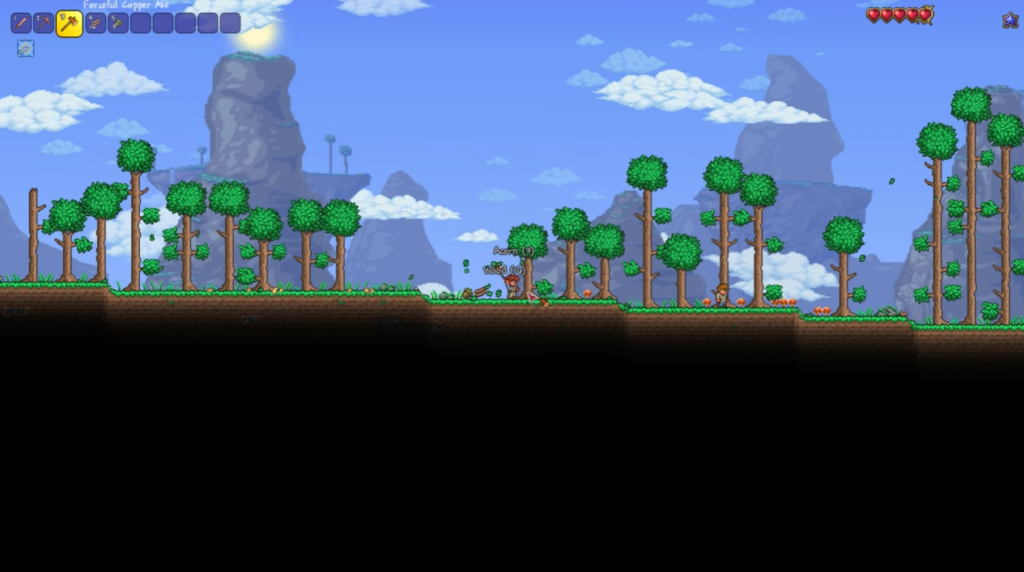
Terraria does not use any formal class selection system, meaning players don’t manually choose a specific class when first creating their character, nor do they need to level up a particular class to unlock abilities or other features.
Instead, a player’s class is highly determined by the weapons, armours, and accessories they use at that moment. Some equipment provides bonuses to several damage types, such as ranged or melee, encouraging players to experience multiple styles of combat.
As an example, if a player is using a sword with some armour that provides bonuses to melee damage, he will lean towards the melee class. If someone else is using bows, guns, or other ranged weapons with equipment that boosts this type of damage, he will be better suited to fighting from a distance rather than close combat.
The Four Main Classes
- Melee
The Melee class focuses mainly on close and direct combat, using swords, broadswords, shortswords, spears, yoyos, boomerangs, and flails. While most of the melee weapons require players to fight at close range, some of them can launch projectiles, allowing for more flexibility during difficult fights.
One of melee’s biggest advantages is its survivability. The armour that’s focused on this class generally provides more defensive bonuses than other types of armour, making it a great choice for those who are looking for a more forgiving combat style.
However, being close to the enemies all the time when you fight them becomes extremely dangerous in Terraria, especially when taking on powerful bosses with mighty pattern attacks. You need to balance your offensive equipment with enough defence and mobility to raise your chances of survival.
- Ranged
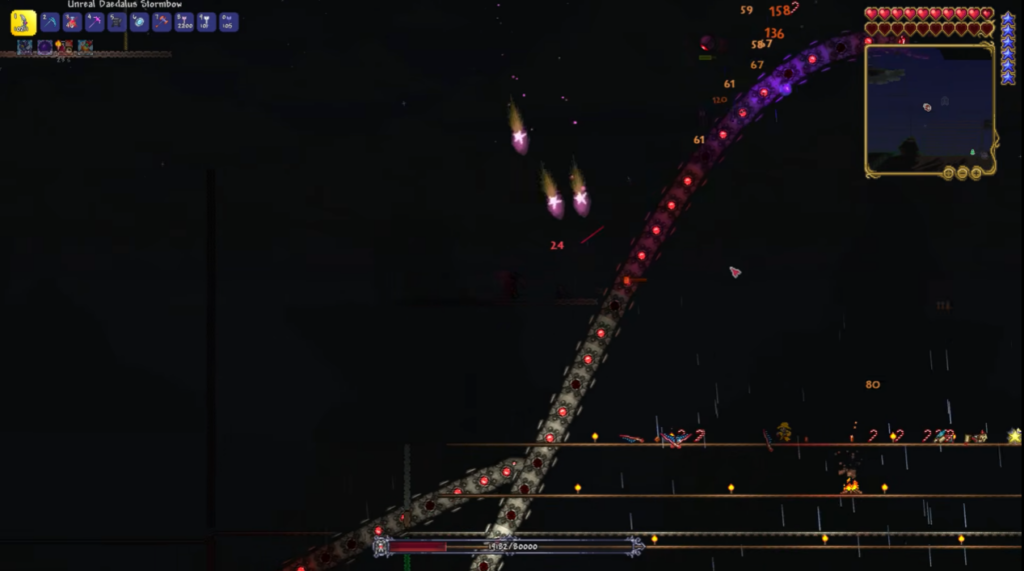
The Ranged class specialises in dealing damage from a specific distance using bows, guns, repeaters, and launchers, giving you the opportunity to attack enemies from a safe place without needing to be close to them.
Ranged combat is mainly effective and recommended against most bosses and dangerous enemies because you can maintain your distance while still dealing damage. Different weapons also provide different advantages, from accurate single attacks to piercing or explosive damage; combining this class with some mobility will not disappoint you.
Make sure to keep in mind that you’ll need ammunition, because many ranged weapons require arrows, bullets, or other ammunition, meaning you should always prepare with materials and craft enough ammo before taking on a boss or an enemy.
- Magic
The Magic class uses mana-powered weapons providing different types of attacks, from short- to long-range combat using wands, magic guns, and spellbooks. These weapons can fire projectiles, create area-of-effect damage, target more than one enemy, and so on.
Magic is commonly used by players when dealing with large groups of enemies, although its effectiveness depends on the situation and the weapon that is used. These weapons have very different attack ranges, speeds, and mana costs, meaning some weapons are useful in certain scenarios while others aren’t.
The main limitation that the Magic class has is mana management. For these weapons to be effective, players need to keep an eye on their mana supply and may need to use mana-restoring items to maintain consistent damage.
Also, magic-focused armour provides less defensive bonuses compared to Melee, so movement is extremely important to maintain your health points and deal high damage.
- Summoner
The last class on this list is the Summoner; it generally focuses on minions and sentries that attack enemies on the player’s behalf. With that, instead of relying on direct attacks, you can use your summons to deal damage while still dodging and changing your position.
Summoners also use whips, which are used to attack all the enemies directly and guide your minions towards specific targets. This gives the class an interesting and unique playstyle that combines managing summons with direct combat.
Besides all the advantages, one of the main disadvantages of this class is its defence. That’s because its dedicated armour provides less defensive support than magic armour, so make sure you try to avoid enemy attacks as much as possible to ensure you will be effective in fights.
However, a summoner can also complement other classes, as a summoner can still use its minions to attack enemies and provide damage while fighting with a melee, ranged, or magic weapon, making summoning equipment useful even when it isn’t the main focus of the character build.
How Does Terraria Balance Its Classes?
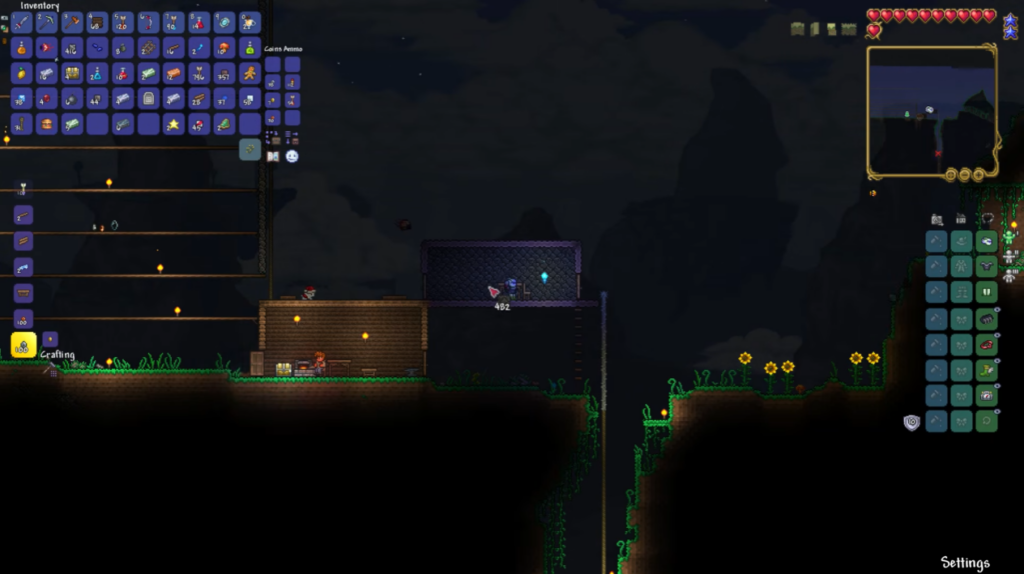
Now you’re probably thinking, how does this game manage to balance all these class features? Well, Terraria’s class system does not rely on making everything identical. Each playstyle offers equal advantages and disadvantages, encouraging players to experiment and think about how they approach combat.
| Class | Main Strengths | Main Limitations |
| Melee | Defence, survivability, and close-range combat | Almost every melee weapon requires fighting near enemies, which can become dangerous |
| Ranged | Attacking from distance, versatility, and consistency | You will need to constantly manage ammunition and may run out of it |
| Magic | Varied attacks and specialised weapon effects | Mana management and lower defence in some cases |
| Summoner | Summoning minions provides additional damage while you move or attack with other weapons | Dedicated armour is the weakest option in the game |
These differences make every class feel unique; a melee player may be able to take more hits from an enemy, while a ranged player can attack safely from a safer distance. A mage can choose from a wide variety of magical attacks, while a summoner can hold off enemies with their minions while still focusing on movement and dealing damage.
Make sure to keep in mind that equipment is very important and plays a major role in balancing these classes. Armour sets and accessories can increase specific attributes while also missing on the others. Choosing the right combination will always make a significant difference.
It’s also important to remember that balance changes as you progress through the game. This means that one specific class will feel stronger in one stage of the game and slowly become less effective in the next stages, requiring a different weapon or a new strategy.
Why Doesn’t Terraria Limit Players to One Class?
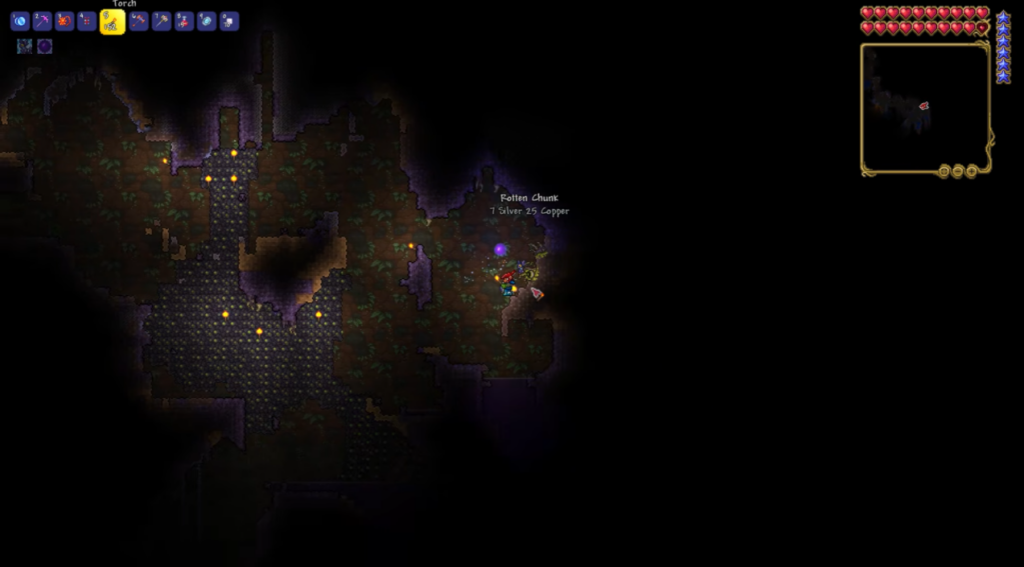
One of the biggest strengths of Terraria’s class system is that they do not restrict players to a specific class, giving the freedom and the opportunity to experiment with different types of playstyles and combat techniques. There is no class selection menu when creating your character that determines which weapons you can use, and switching weapon types does not require creating a new character.
A player who mainly uses melee weapons and has been using them since he first started his world can always choose to try a new way of attacking enemies by picking up a powerful ranged weapon and trying it against a difficult boss fight where a melee weapon is not recommended.
There are several advantages to this approach:
Freedom to Experiment
Players can always try new weapons as they discover or craft them instead of simply ignoring them because they don’t match their current build.
Adaptability During Boss Fights
Different enemies and bosses have unique attack patterns alongside weaknesses. Changing equipment whenever it is required will surely help you find a strategy that works better for a specific enemy encounter.
Less Pressure When Choosing Your Equipment
As we talked about, there is no class selection system, meaning that your class is not permanent and can always change. You can explore different loadouts without worrying about making an irreversible decision.
More Build Opportunities
Since you can always mix and match equipment and accessories for unique builds to fit your playstyle, whether it be one specific class or mixing many features from each class, but specializing in one class often becomes more effective due to equipment bonuses.
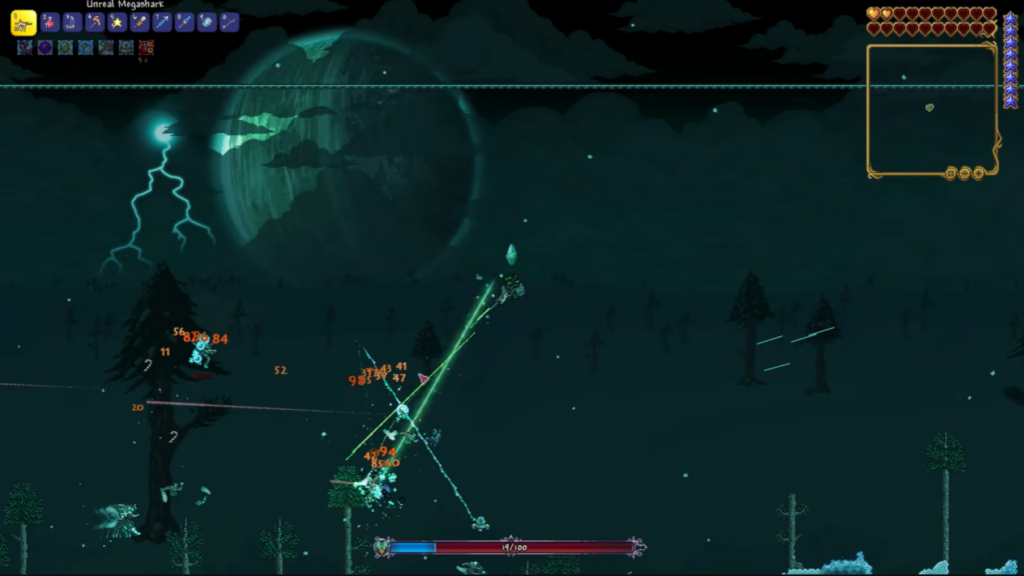
Hybrid Builds – Mixing Classes
One of the most fun things about Terraria is class flexibility, especially when you’re mixing and matching gear from different classes into one loadout. These hybrid builds allow players to experiment and take advantage of equipment from multiple playstyles instead of relying on a specific style.
Like that, a player could equip melee armor and accessories that improve survivability and provide defensive bonuses, but still keep a ranged weapon handy for situations where enemies are too dangerous to approach.
Besides its advantages, hybrid builds also involve trade-offs. Many armour sets and accessories provide attribute bonuses to certain damage types, and equipment slots are limited. With that, using a hybrid build with too many unrelated bonuses will eventually lead to an ineffective build, compared to a build that’s focused on a specific class type.
Common Mistakes When Choosing a Class
Although Terraria gives plenty of freedom to all of its players, there are a few common mistakes that you should avoid in order to not make combat more difficult than it actually needs to be in any stage of the game.
Sticking to One Class Too Early
The most common mistake people make is sticking to one specific class when first starting your adventure. It’s easy to decide on a class at the beginning of the game and then ignore all the equipment that does not match your chosen class. However, early-game equipment is limited, and a weapon from another class may be much more useful and stronger in certain scenarios.
Ignoring Defence and Mobility
You should always keep in mind that damage isn’t the only significant factor that matters during an enemy encounter. Players also need to survive enemy attacks and move efficiently around the enemy, especially in boss fights, and then worry about the damage.
Using Equipment That Doesn’t Match Your Desired Build
Many dedicated armour sets and accessories provide several attribute bonuses for specific damage types. If your equipment is mostly focused on melee damage, using a magic weapon as your primary source of damage may mean you’re missing out on powerful bonuses; make sure to keep an eye on this one.
Refusing to Adapt to Bosses
Not every weapon type performs equally well against all enemies and bosses. Some weapons are more useful against groups and swarms of enemies, while others are more effective against individual targets or enemies that are dangerous to approach.
If you’re struggling with a boss, always consider changing your weapon or your strategy instead of relying on the same setup again and again until you can’t go on.
Overlooking Summons
Even players who aren’t specialised in summoning can benefit from additional enemy damage and pressure while using the provided minions. Summons can provide extra damage while you can freely focus on another weapon, making them a useful addition to most builds.
Summary
Terraria’s class system takes an important role when it comes to its combat. Working differently from the traditional class systems found in many role-playing games, it gives players plenty of freedom to experiment with different playstyles through specific equipment and accessories that also provide bonuses if used right.
The four main classes: Melee, Ranged, Magic, and Summoner, each provide distinct advantages and disadvantages, giving players the opportunity to approach enemies and bosses in different ways.
Hybrid builds are also very effective if used correctly, as you can adapt to different encounters, meaning you’re not restricted to one playstyle for your entire adventure. The reason Terraria’s class system works is that it gives players the freedom they need. They can freely stick to a specific class if it benefits them and they like it, or change their approach whenever necessary and eventually create a unique combat style that suits the way they want to fight enemies.
Are you ready to explore the vast world of Terraria with your friends? Here at Cybrancee, we offer reliable Hosting Plans that are designed to help you create and manage your own multiplayer world.
With features such as instant server setup, super-speed optimization, DDoS protection, global server locations, and much more, you can focus on exploring, building, and fighting together without worrying about server performance.
Starting now at just 3.99$/month.