

What if you woke up as a dead Viking warrior, magically dropped in a huge, mythical Nordic wilderness that kept going in all directions? When you looked around the area of green pine trees, rolling hills, and mountain peaks far away, it would be quite an extraordinary thing to realize that absolutely none of this terrain was made by a game designer’s hand. Rather, an intricate mathematical system created the entire world for you at the instant you clicked the start button.
Valheim employs a really interesting technique of procedural generation to come up with its huge sandbox environments. So the game actually executes a series of hard and fast rules and mathematical equations to create a completely different map with every new game started by a player. Most worlds are very different from one another. That is what makes every survival adventure unpredictable and forever fresh.
Knowing how the game constructs its continents, spotting dangerous biomes, and locating boss altars hidden is very handy for any newbie. Besides helping you get around the map more proficiently, it also gives a reason for you why certain resource areas are found exactly where they are. This comprehensive guide will explain the working of the Valheim world engine so you will be able to conquer the terrain of the tenth Norse world.
The Anatomy of a Valheim World
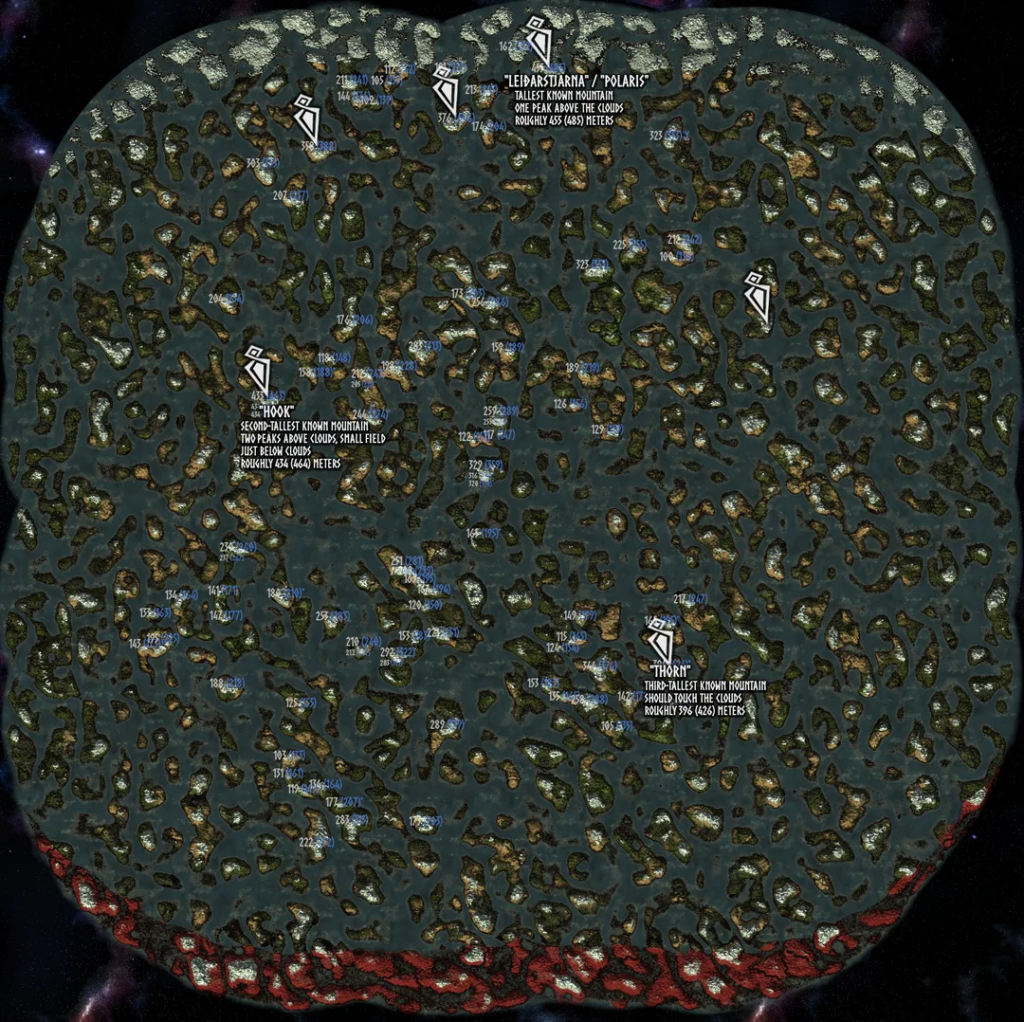
Each world in Valheim starts as a huge, flat circular area that looks like a great Viking shield hanging in space. The whole size of this round map is 20, 000 meters in diameter, which means the radius is a whopping 10 kilometers from the very center point of your first spawn into the game.
When you first access your map, the whole circle is shrouded by a dense, dark fog of war. Gradually, as you walk, run, and even sail you dispel this fog and reveal the terrain below. The anatomy of a Valheim world depends on different rules to ensure the players have an enjoyable and engaging experience:
The Center Point
The very heart of the circular map is called the world center, and it is a safe haven where the sacrificial stones can be found.
The Outer Rim
The edge of the huge circle is demarcated by a gigantic ocean current that endlessly pulls boats in the direction of a scary waterfall dropping into the void.
The Continental Scale
The game engine creates thousands of tiny islands, giant continents, and winding rivers instead of one big piece of land.
Since the world is so gigantic, moving around from the supposed safety of the center to the perilous outlying regions takes many hours of actual exploration, and so boats and portals become indispensable survival tools.
Understanding World Seeds
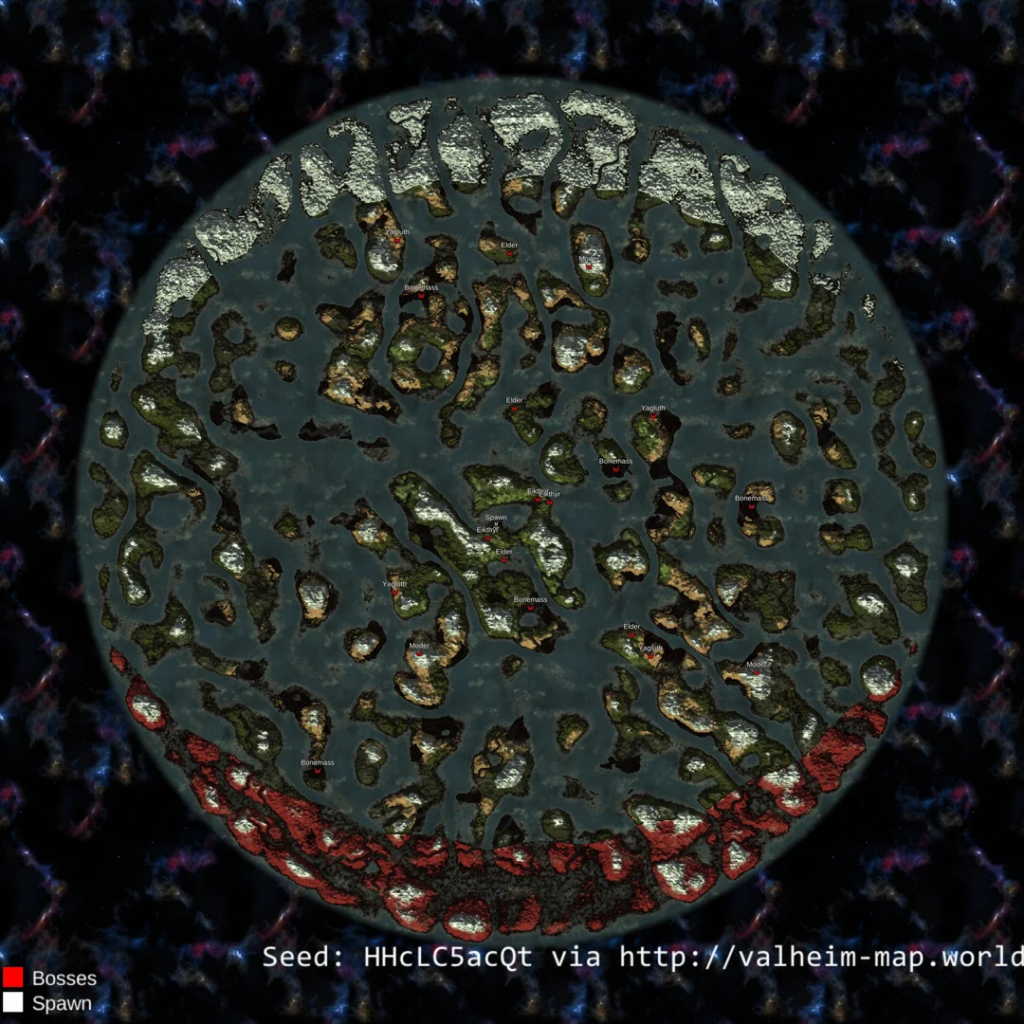
At the heart of all procedural generation in Valheim lies a concept called a world seed. A seed is a string of exactly ten characters that can be a combination of uppercase letters, lowercase letters, and numbers.
This short text string works like the master key or the DNA code of the whole mathematical map engine.
When you make a new world, the game will give you a random seed automatically if you don’t write anything in the box. But if you want to use a map that someone else has found, you can also enter a specific code manually. The interaction of seeds with the world generation engine is based on a few important mechanics:
Infinite Variations
Changing just one letter or number in a seed of ten characters will completely change the layout of the map, giving you different landmasses and mountain shapes.
Perfect Replication
If you and a friend enter the same text string into the seed box on two entirely separate computers, the game will generate two worlds, identical in every aspect, down to the placement of single rocks and trees.
Sharing with the Community
Players usually post great seeds online that have bosses spawning close, huge patches of resources, or beautiful locations for building to give beginners a helping hand.
The seed system guarantees that even though the world generation is random, you’re also capable of getting the same world by doing the right code.
How Biomes are Placed
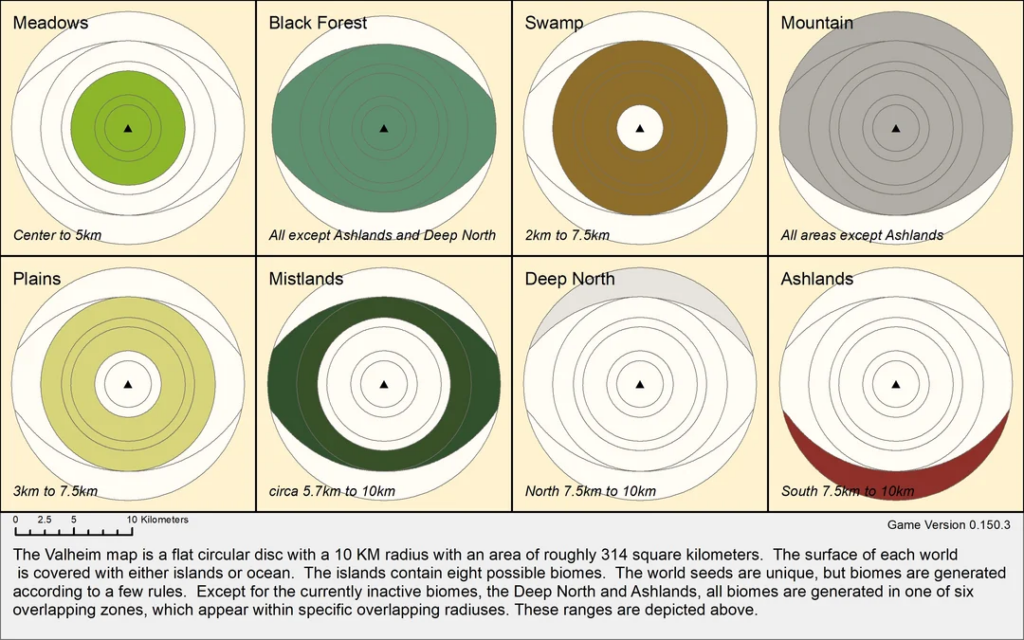
The Valheim engine doesn’t just throw various biomes all over the map in a random circle. It actually relies on a distance-based algorithm that determines the exact maximum spawning distance of a biome from the world center. By doing this, the game not only maintains a natural sense of progression, but also keeps early game areas safe, and high-tier dangers are located at the edges of the game world.
As you go away from your first spawn point, the environment changes dynamically depending on your distance from the center:
The Meadows
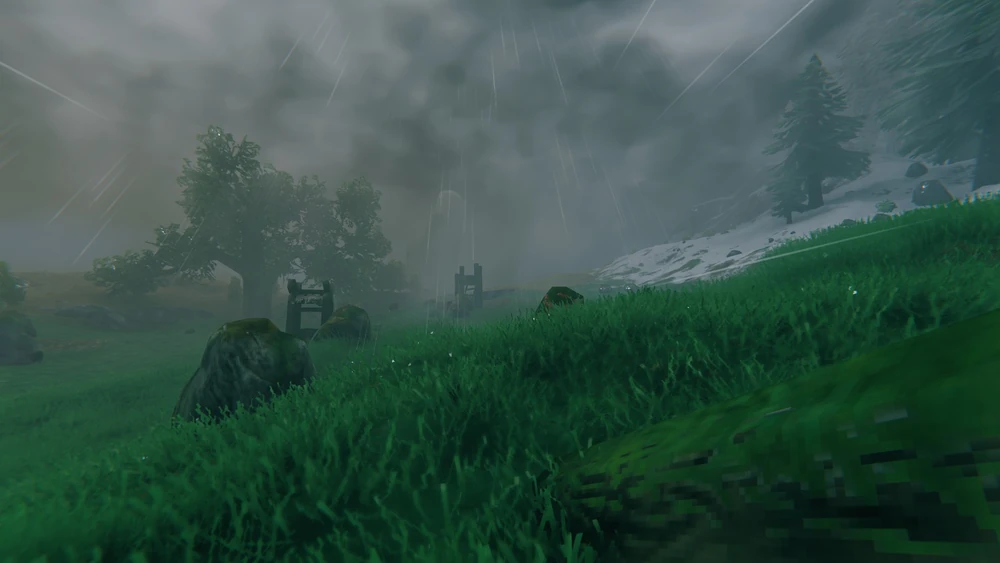
This is a serene starting biome with lots of grass, deer, and wood. It is always generated at the absolute center of the map to offer beginners a secure area where they can build their first base.
The Black Forest
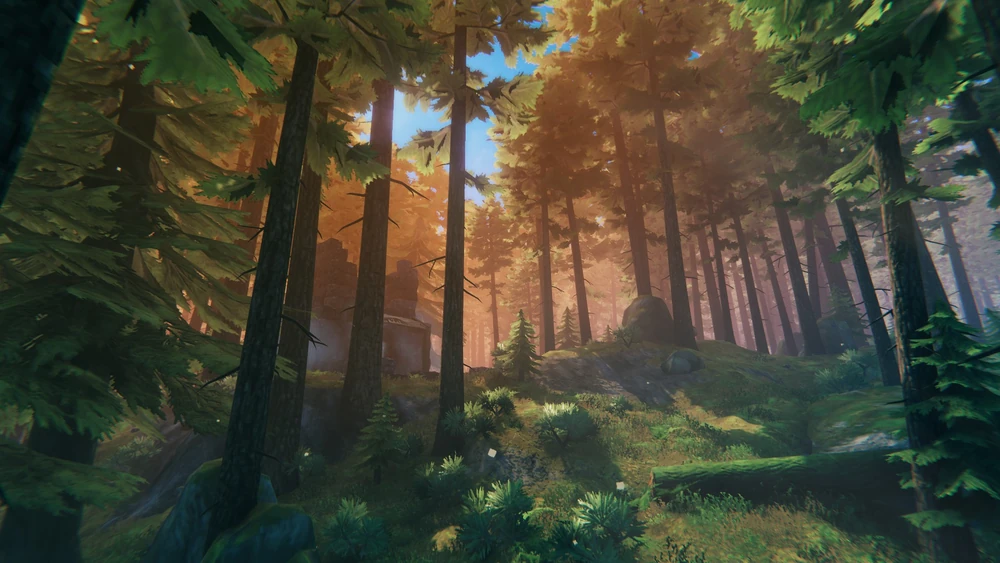
This is a darker biome that is rich in copper and it is located just outside the central Meadows. Usually, it starts to appear anywhere from 500 to 1, 000 meters away from the center point.
The Swamps and Mountains
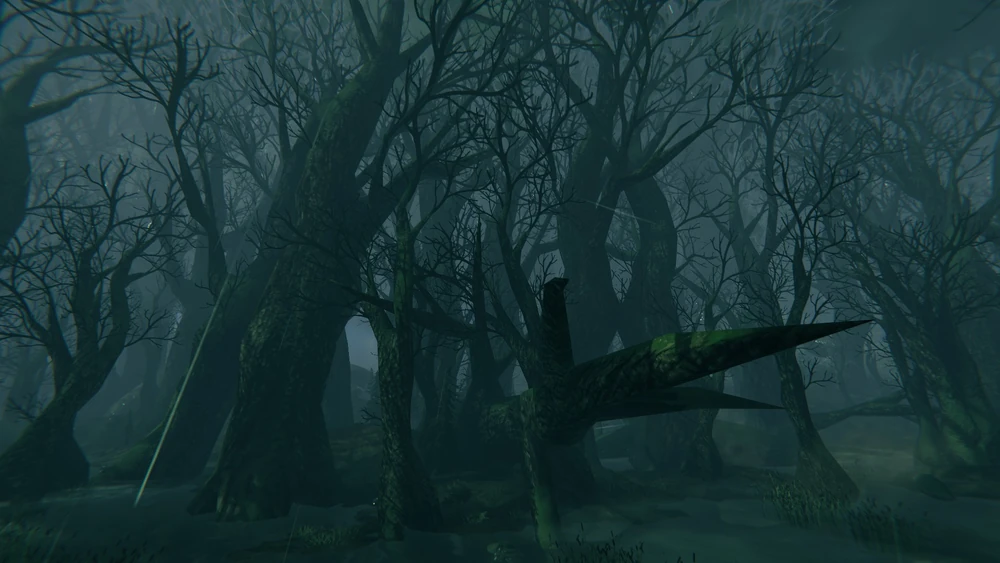
These are the areas you will find in mid-game that offer new challenges requiring you to have better gear and some cold-resistant clothing. The game world starts generating these zones only after you have moved more than 2, 000 meters away from the center of the world.
The Plains
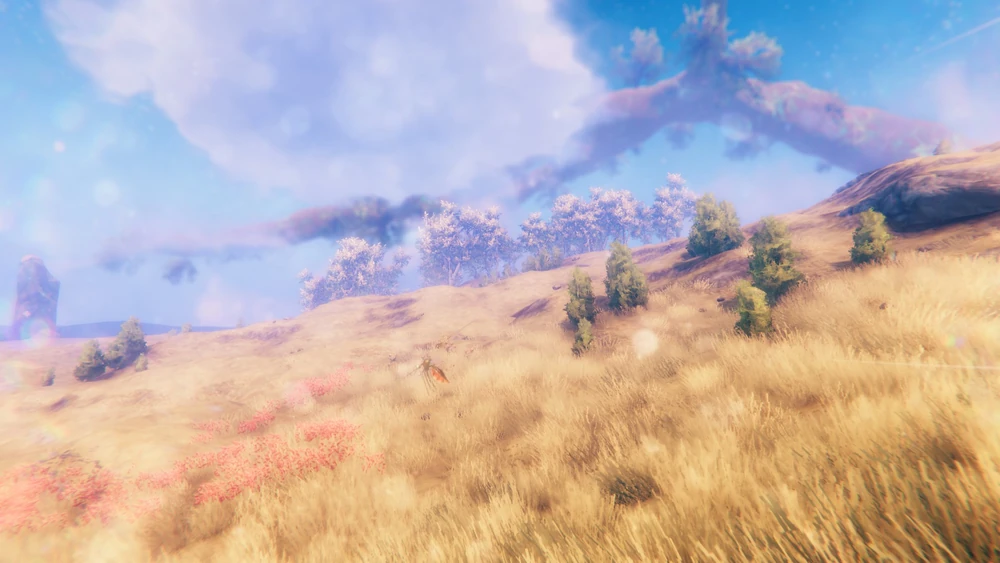
One of the most dangerous daytime biomes, filled with very aggressive insect species and goblin-like creatures. This biome is found in the mid-to-outer rings of the circular map.
The Mistlands and Ashlands
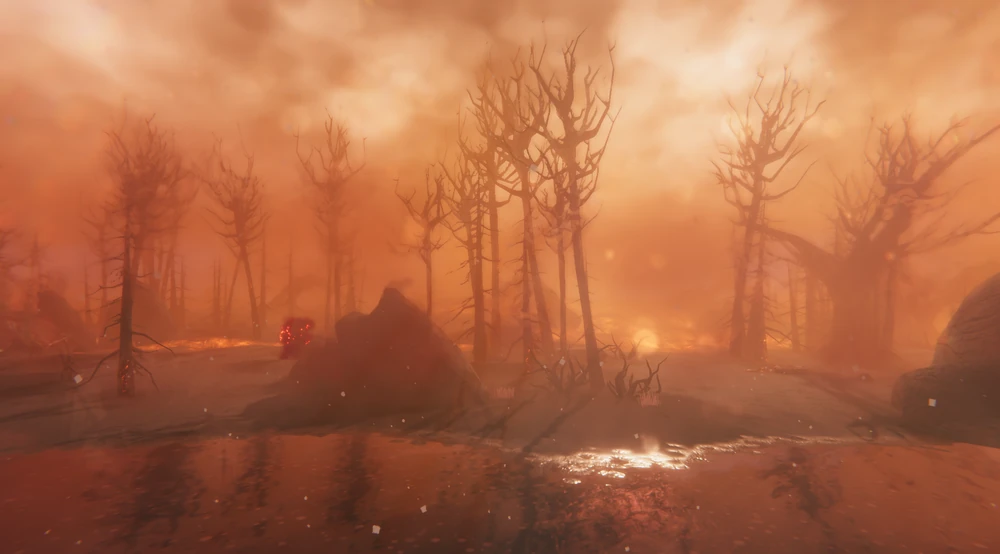
These are perilous, high-level game biomes where one needs to be completely geared up to be able to survive. Mistlands are mostly spread in the outer areas, while the fiery Ashlands are found in the very deep, extreme southern part of the circular map.
The Deep North
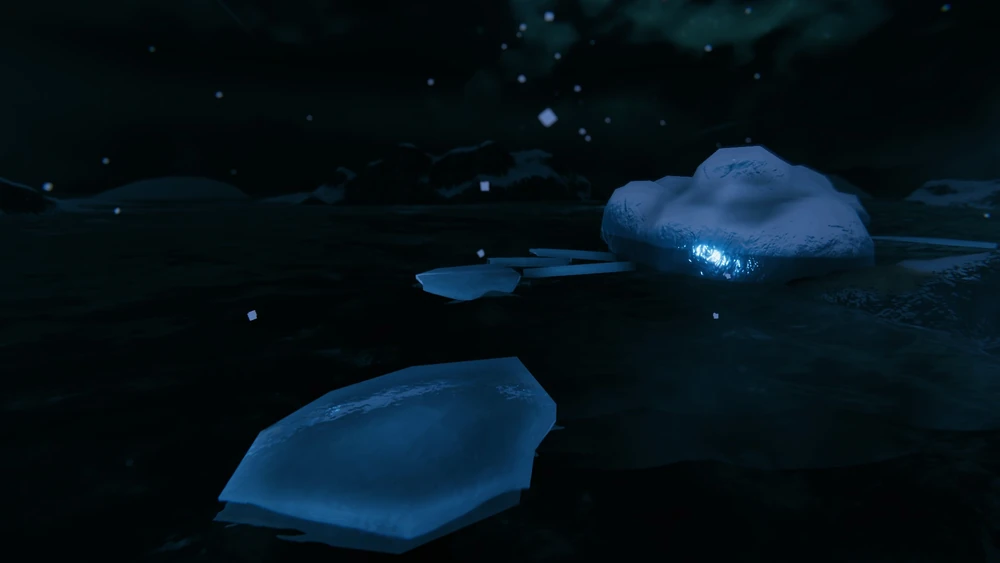
This is a cold, unspoiled biome and is specifically accessible to the farthest northern edge of the map, thereby forming a permanent polar cap.
Thanks to this simple repetitive pattern of concentric rings, it is quite easy for you to figure out at a glance the level of danger of an island just by seeing how far you have sailed away from the center sacrificial stones.
Structures, Resources, and Boss Altars
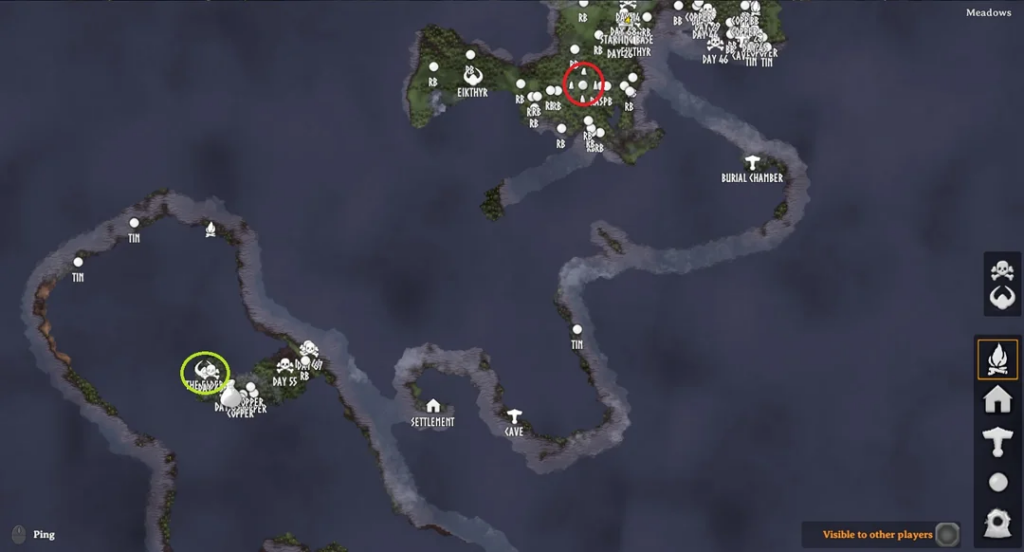
After the world generation system decides the placement of the continents and various biomes, it moves on to the last step of generation by randomly placing significant landmarks. These landmarks can be, for example, old deserted Viking villages, underground tomb chambers, veins of copper ore, and especially the secret altars which players can use to summon powerful bosses in the game.
The system follows a very strict checklist when it comes to the placement of these structures to make sure that they are not overlapping or floating in the air in an unnatural way:
Boss Altar Placement
Game logic generates several possible boss altar spawn points for each boss in the world. However, the timing system generally dictates that bosses from early tiers appear near the world center while late-game bosses are relegated to remote, unexplored continents.
Resource Veins
Metals like copper, tin, and iron are linked strictly to their respective biomes. Tin is meant to be found near sea level, and indeed, the height maps that the engine uses show tin spawning along the coastlines. As for silver, it is meant to spawn only at mountain summits.
Dungeon Locations
Crypts, caves, and burial chambers are scattered randomly over valid biome locations; however, they have been designed in such a way that they maintain a minimum distance from each other so they do not overlap.
If you are having a hard time locating a particular boss altar or dungeon, going to a different continent within the correct biome ring can often lead to the generation of a new one.
Perlin Noise and Heightmap Generation
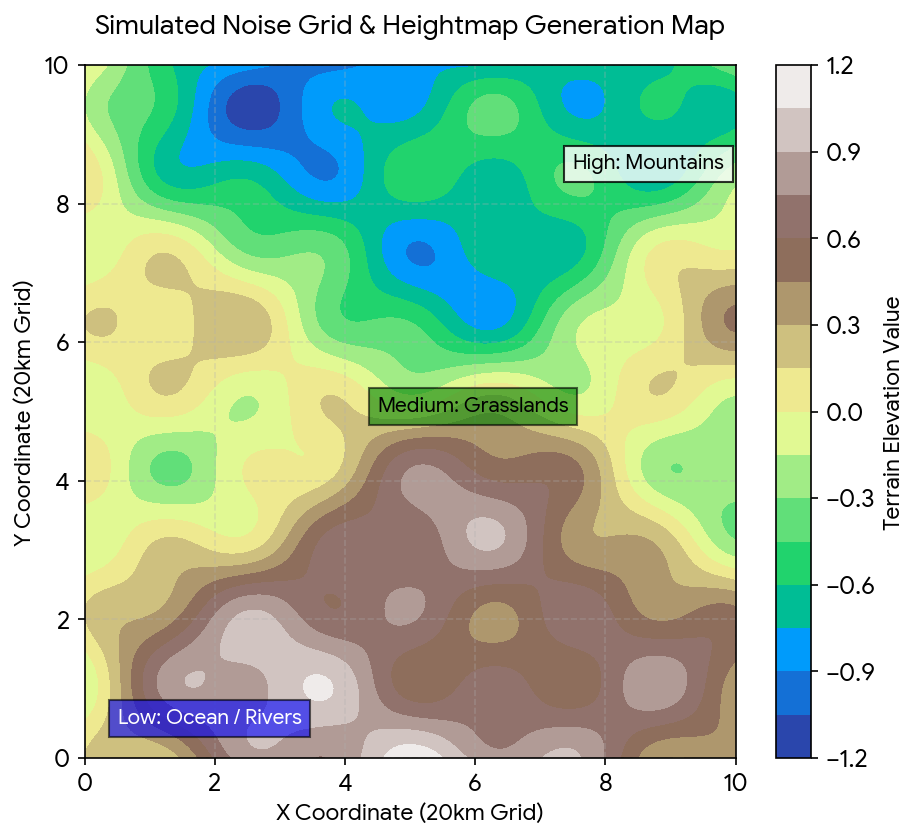
Valheim’s generation system mainly draws on a mathematical principle called Perlin noise to craft natural grids of coastlines, mountain ranges, and valleys, instead of jagged, artificial steps. Perlin noise, for the uninitiated, is a species of gradient noise that game developers harness to fabricate intricate, smooth, and nature-like textures and elevations of 3D landscapes. Utilizing the gaming engine, it plays several layers of ‘octaves’ of this noise sequentially, where at times some layers master gigantic continental boundaries and other layers shape tiny, crumbly hills.
Upon the computer’s first execution of a seed code, the engine sends the ten-character string to a pseudo-random number generator. This mathematical procedure is what assigns concrete numerical values to every single combination of coordinate grids all across the 20-kilometer grid map. These numerical factors form the control map of the base heightmap for the entire world:
- Low Values (Below Baseline): If a height value of a coordinate point is below the ocean threshold, it is automatically assigned as deep water, shorelines, or river channels.
- Medium Values (Above Baseline): These mainly depict general land elevations where trees, valleys, and grasslands exist, making it the perfect spot for the generation of characters and wildlife.
- High Values (Extreme Heights): These numerically compel the landscape to rise dramatically, reaching the heights of snow-covered peaks found in the Mountain biome.
The height mapping of the structure is performed at a very early stage, even before the rendering of individual trees or rocks on your screen. Given that the noise filters are, in fact, fully fluid and continuous, users get natural valleys that are beautifully curved, beaches that are long and winding, and islands that are so realistic that they truly make naval exploration feel like sailing through a genuine, organic ocean archipelago.
The Shoreline and River Logistics System
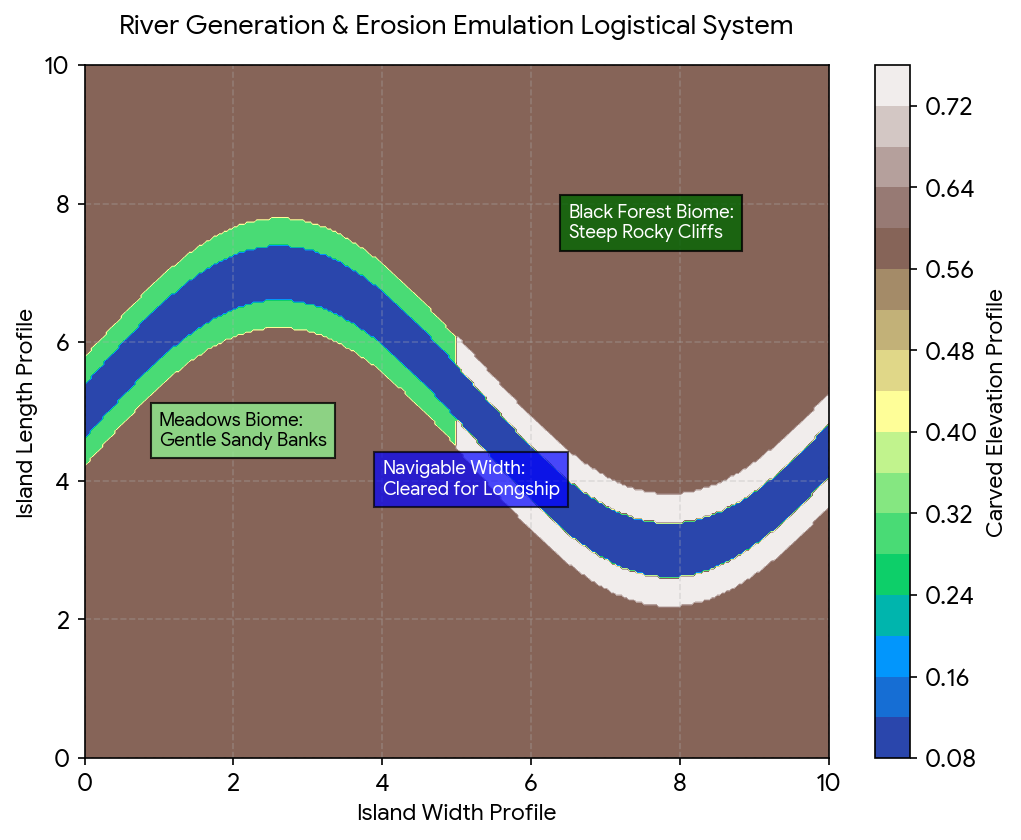
After the initial heightmaps determine where the continents and the deepest parts of the ocean are, a different set of algorithms gradually goes over the different coordinates to find and create routes for water transportation. Since Valheim is a title that almost exclusively uses ships and going through water as a means of resource transport, the world-building system should, at least in theory, actively make sure that the landmasses are not so isolated from each other that you can’t travel between them.
One way to avoid generating a world, i.e., one giant block of solid rock, is by the river generation coding, looking for very narrow gaps in the land height maps. It then lowers these land to the below sea level to create a realistic river system. These programmatic actions are determined by specific guidelines:
- Connection Checkpoints: Besides merely joining the oceanic bodies, that is, the rivers are also designed in such a way, that the player through the shipping lanes created, can cut right through a big island, instead of, by the route sailing all the way around it.
- Erosion Emulation: Depending on the biome through which the river flows, the engine will change the steepness of the riverbanks, so that rivers in the Meadows will have gentle, flat sandy beaches while streams in the Black Forest will have steep, rocky cliffs.
- Width Restrictions: The software locally modifies the width of the river as a measure that even the largest player-built ships, e.g., The Longship, will be able to easily sail through the interior without getting stuck between the banks.
By using the watercourse routing entirely through the program, this way of paving the route means that no matter how chaotic or random your seed map turns out, your world will always feature working naval highway paths that make maritime shipping a very satisfying survival loop.
Vegetation Density and Resource Spawn Regulations
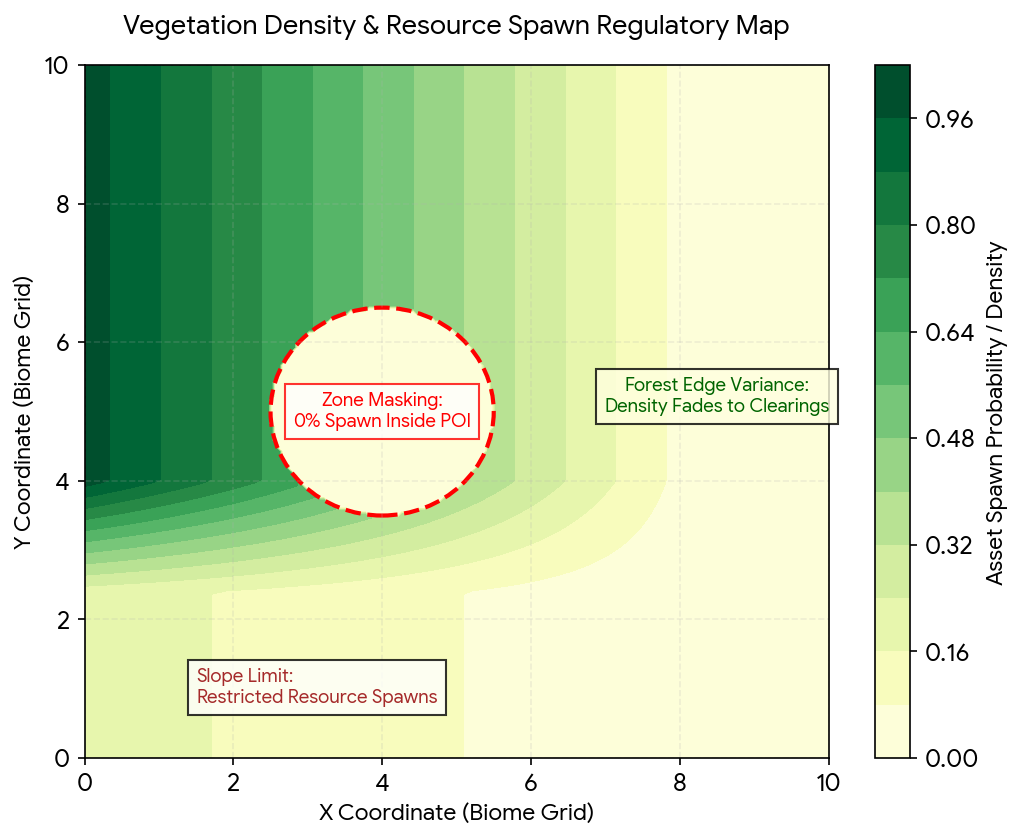
Having set the terrain heights and shorelines, the system of procedural generation then changes the gears of thought towards the process of decorating the landscape. It is the decoration pass phase when the engine will guess the fields with heavy grass, thick forests, old ruins, and resource nodes that can be broken. Doing the game just scattering trees evenly over a biome is not enough; it uses the density of handling dynamically as the simulation of natural growth of the forest.
Before the engine places one single asset model, the decoration engine checks each coordinate point against environmental filters that are very strict. Doing this rule-based framework avoids items from being spawned in broken configurations:
Zone Masking
Not even a single tree, a bush of berries, or a rock will spawn at a position that is right inside the radius of the structures that are active, such as ancient stone towers, goblin villages, or boss altars. This way, the main points of interest are free and inviting.
Sloping Limitations
The placement of the resource node gets the game to even verify the steepness of the terrain. On the other side, delicate Raspberry bushes must find nearly the floor as part of their habitats in the Meadows, whereas the more resilient Blueberries and Copper vines inside the Black Forest are able to be found even on the steep slopes.
Forest Edge Variance
When a forest is getting close to a clearing or to the ocean beach, the density program will naturally lessen the number of trees. This results in proper tree lines and sunlight meadows instead of just delivering players to a totally uniform wall of solid wood.
This complex, layered control scheme explains why the resources appear to be well-organized. Clusters of mushrooms you will find naturally are located under the dark canopy of dense pine trees, whereas bright, sunny clearings are mainly left to wildlife species like boars and deer.
How About a Little More Info on the World Generator Map Tool and Your Seed Prediction?
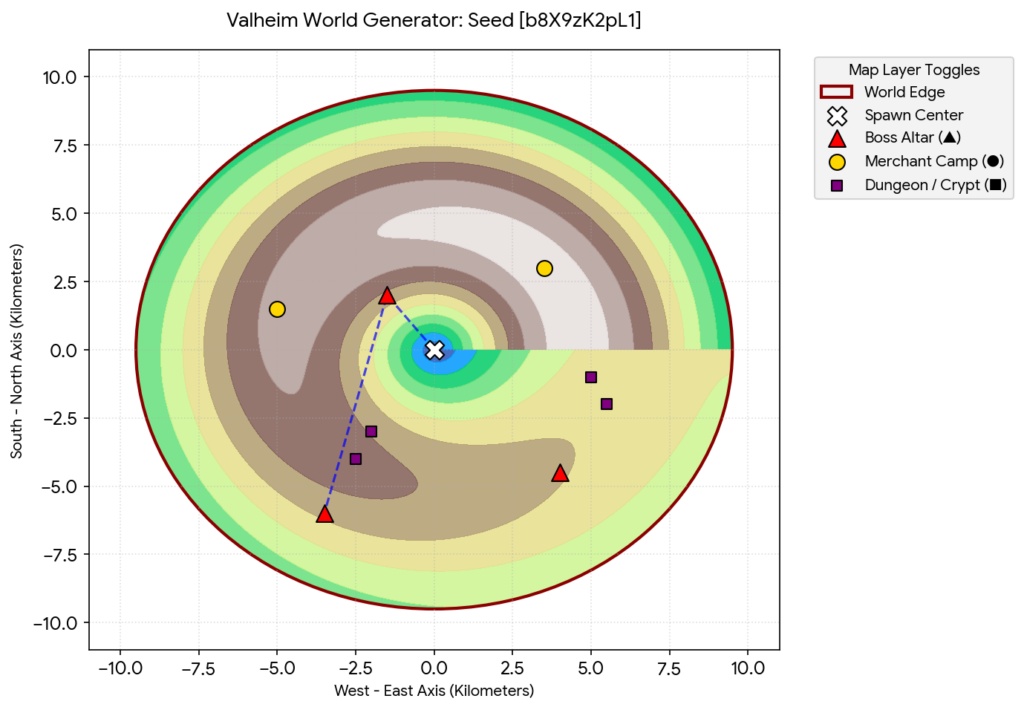
For newbies, the idea of wandering aimlessly over a huge 20-kilometer circular map might be a bit intimidating. It can be particularly frustrating when you spend hours sailing over an endless ocean only to find out that your boss’s altar is in the opposite part of the world. The good news is that since the world generation math is completely static and repeatable, community developers have been able to reverse engineer the entire code.
Thanks to this mathematical discovery, the unofficial Valheim World Generator was developed, which is an immensely popular web-based map tool used by millions of players globally. When you input your ten-character seed string in the browser application, it carries out the exact same procedural generation steps as your game client and produces a complete, fully interactive map of your world at once:
- Switching Points of Interest: You can selectively switch on the markers to get the exact locations of hidden merchant camps like Haldor and Hildir, while at the same time not spoiling the rest of the geography.
- Crypts and Dungeons Finder: The tool shows the location of all sunken crypts inside the Swamps or burial chambers inside the Black Forest, which means you don’t have to waste hours wandering inside dangerous biomes looking for iron and bronze materials.
- Boss Progression: You can see where each high-level boss altar is, so that you can set up your main progression bases along the clever maritime routes that take you directly to the endgame zones.
Of course, there are those who like the raw, old-school way of gradually discovering the map with their own boat. However, a seed viewer tool is an extremely useful and efficient method for server administrators and casual players who want to check if a map is good to play before spending hundreds of hours on just one world file.
World Update Logistics and Patch Compatibility
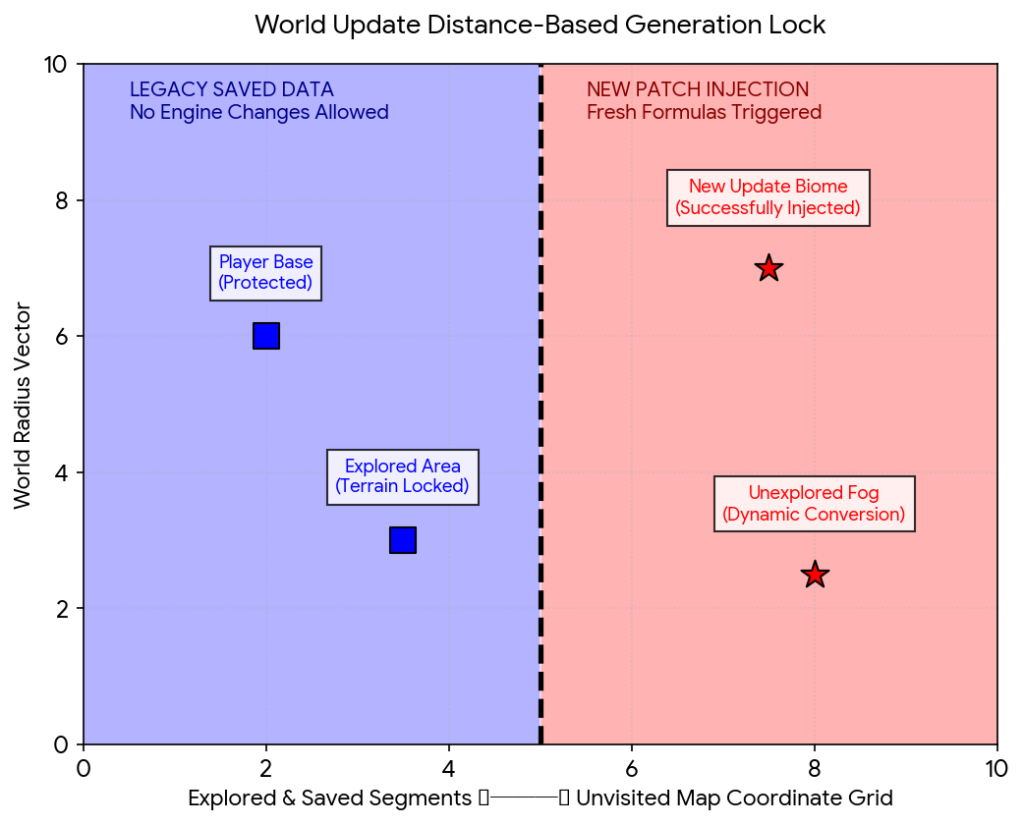
One of the main challenges in procedural generation engines involves game developers launching a major new update featuring the addition of a new biome or building type to the game files. Your world map derives its height maps and asset locations only the first time you create the save file, so adding new code elements to an old, already-existing map folder is a very difficult problem.
When significant updates come, Valheim’s engine safeguards your effort and personal creations by employing a distance-based generation lock:
- The Exploration Lock: Any area on your world map that you have physically visited and freed from the fog of war is permanently saved on your computer in exactly the state when you first entered it. The engine will never modify these areas, so that your handmade bases will not get hidden under new world terrain modifications.
- Unexplored Territory Conversion: Any remote, unvisited island that is still concealed under the darkness of the fog of war will, upon your sailing to that area, go through the updated generation formulas automatically. This is how old single-player worlds can still generate new biome features, custom structures, and updated enemy camps, while you are not forced to delete your save file.
- The Upgrade Command Option: For those running community persistent worlds, server administrators have at their disposal community-made tools such as the “Upgrade World” mod. This tool lets admins securely spawn new resource nodes and refreshed dungeon locations in areas that have already been explored, without damaging the player-built structures.
This well-planned technical approach keeps your legendary Viking dwellings absolutely safe from abrupt changes of the terrain, yet it also gives you the possibility to go sailing toward the far outer limits of your old world and enjoy the latest survival elements and endgame biomes using your original character.
Conclusion
Valheim Procedural World Generation Engine is a Game Math Masterpiece. Mixing 10-char world seeds with distance-based biome layout, the game creates a huge, unique sandbox world where finding new things is always fun, and gameplay progression is fair, too.
Why not keep your boat well-equipped, make the best use of the map with the help of the concentric ring logic, and share your seeds if you want to check out a particular world layout of the community-built one, all of which will, of course, be done after understanding that as you go farther on the ocean rim, the risk present to you will increase significantly.