



Minecraft 26.2, the Chaos Cubed update, introduced many new items and features, including the sulfur cave biome and sulfur blocks. One of the more interesting features added in this update is geysers. Geysers shoot out a vertical column of sulfuric water, either on a timed cycle or continuously, and launch players and entities straight into the air without requiring redstone.
In this blog, we will walk through both geyser types, how to build each one from scratch, and what you can use them for once built.
What are the two types of geysers?
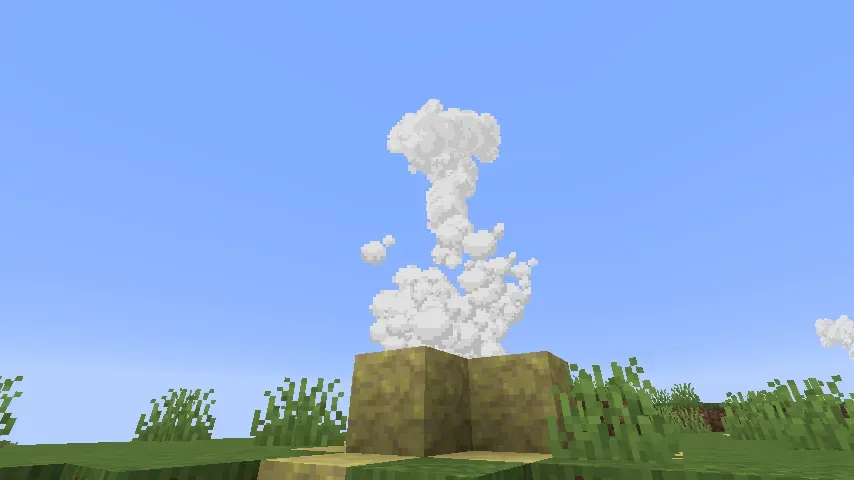
There are two types of geysers.
Periodic geyser: The geyser will erupt on a cycle rather than erupting continuously. You will need magma blocks to create this type. Since it doesn’t erupt constantly, it is a better choice for elevators or timed builds.
Continuous geyser: The geyser will continuously erupt and will never stop. This is easier to build and doesn’t require magma blocks. Instead, you need a bucket of lava. It’s a better choice for builds where waiting for an eruption isn’t necessary, such as an elytra launcher.
What do you need to make a geyser in Minecraft?
Both methods require the following items:
| Item | Amount |
| Potent Sulfur Block | 1 |
| Magma Block | 1 |
| Lava Bucket | 1 |
| Water Buckets | 2 or more (depends on how high you want your geyser) |
Regular sulfur blocks generate in clusters inside sulfur caves, usually in groups of 6-12. Nine regular sulfur blocks can be combined to craft a potent sulfur block.
You can quickly find magma blocks without going to the Nether by searching for a ruined portal. They often spawn some magma blocks around the portal.
Before you start, make sure you gather the materials you need to build your geyser in advance so you don’t have to make multiple trips to get more resources.
Method 1: How to Make a Periodic Geyser (Using Magma Blocks)
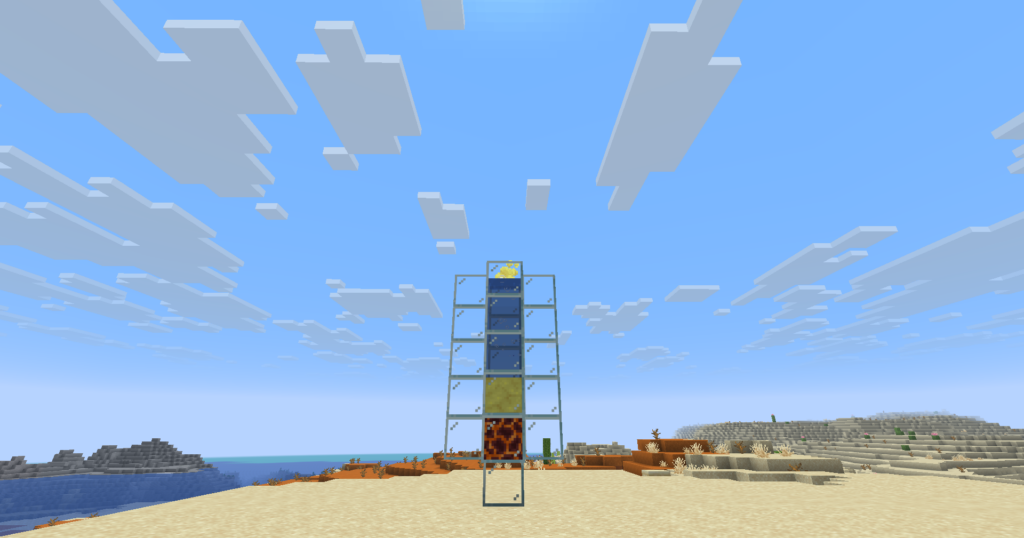
Step 1: Dig a pit that is at least 3 blocks deep.
Step 2: Place a Magma Block at the very bottom of the pit.
Step 3: Place a Potent Sulfur Block directly on top of the Magma Block.
Step 4: Fill the entire pit with water using your buckets. Don’t place water only at the top, as the geyser will not form. Every layer needs to be a full source block.
Once you have completed the steps, the eruption cycle will begin shortly after.
The eruption cycle entirely depends on the water depth. If you want a longer eruption duration, the water depth must be increased. Keep in mind that an increase in the depth of water will also increase the time when the geyser is dormant. For example:
| Water Depth | Dormant Duration (in seconds) | Eruption Duration (in seconds) |
| 1 block | 15-30 | 1-2 |
| 2 blocks | 25-40 | 2-3 |
| 3 blocks | 35-50 | 3-4 |
| 4 blocks | 45-60 | 4-5 |
Warning: The limit is 4 blocks deep. Going deeper than 4 blocks will end up not erupting at all.
Method 2: How to Make a Continuous Geyser (Using Lava)
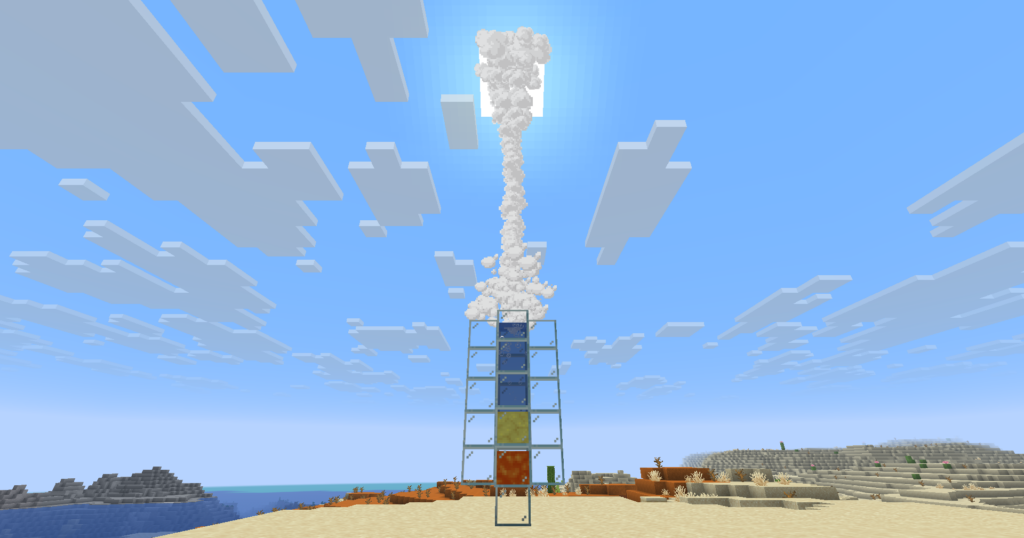
Step 1: Dig a pit 3 to 5 blocks deep.
Step 2: Place the lava at the bottom of the pit.
Step 3: Place a Potent Sulfur Block directly on top of the lava.
Step 4: Fill the entire pit with water using your buckets. Don’t place water only at the top, as the geyser will not form. Every layer needs to be a full source block.
Once you have completed the steps, the geyser will be erupting continuously.
Common issues when building a geyser
The geyser is not erupting at all: Make sure the water depth is between one and four blocks high. Otherwise, the geyser will not erupt. Plus, each water block must be a full source block. Placing water only at the top of the channel will not work.
Instead of a geyser, there is a nausea effect: This means there is no lava or a magma block underneath the Potent Sulfur block. Add lava or a magma block underneath to fix this.
The eruption isn’t as tall as expected: To increase the eruption height, you need to add more water above the sulfur block to increase both the height and the eruption duration. Note that the more water added will increase the dormant period between eruptions.
The geyser stops erupting after working normally for a while: This almost always means the source underneath the potent sulfur block got removed. Check underneath the potent sulfur block and replace whatever’s missing. The cycle will pick up on its own once the source is restored.
Multiple nearby periodic geysers erupt out of sync: This is not a bug. Each geyser’s cycle has a randomized interval of when it will erupt and how long it stays dormant for.
Finding Natural Geysers (No building required)
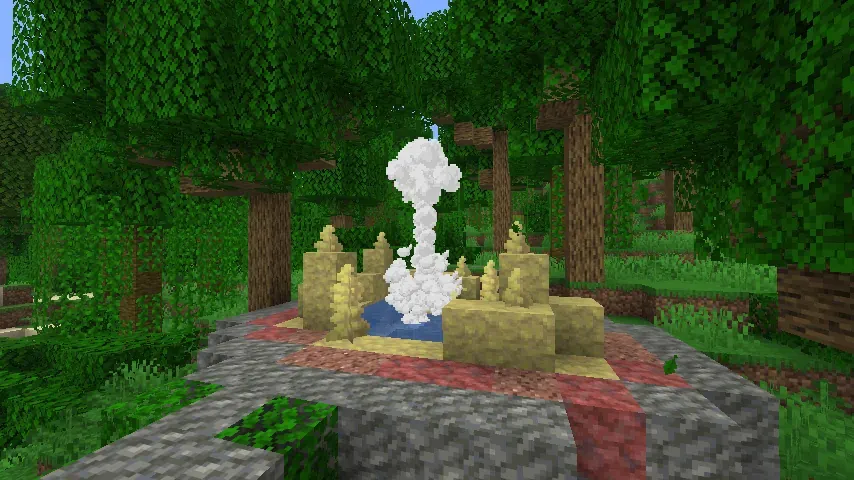
If you’d rather not set up a geyser manually, you can find naturally generating geysers.
Natural geysers generate in sulfur cave biomes, which are usually located at similar depths to lush caves and dripstone caves. Sulfur caves do not generate under oceans or high mountains. They are more common under flat terrain near swamps and deserts.
Geysers can also be generated on the surface in Sulfur springs. These springs are small ponds surrounded by sulfur, tuff, and sulfur spikes.
Both locations contain potent sulfur blocks and magma blocks (or lava) to create geysers. If you find one already erupting, you can mine the components and relocate the whole setup instead of gathering materials separately.
How high do the geysers go?

The height of the geysers depends on the water depth. The formula to calculate the height is straightforward:
Geyser Height = 5 x Water Depth (in blocks)
For example, if you want to have a geyser that is 10 blocks tall, the depth of the water must be two blocks deep. The maximum height of a geyser is 20 blocks, which is achieved with 4 blocks of water above the Potent Sulfur block.
What can you use the geysers for?
There are many different use cases for geysers.
Elytra Launcher: Construct a continuous geyser using lava. Go into the geyser wearing an elytra, and you will be launched up into the air. This will instantly open your Elytra wings, allowing you to fly. Make sure the water height is around 2 to 3 blocks, so you have enough height to clear surrounding terrain. However, don’t have the water height too deep so you don’t waste time waiting to reach peak launch height to use your elytra. Plus, make sure you build the geyser away from ceilings or something you can get caught on so you don’t take damage.
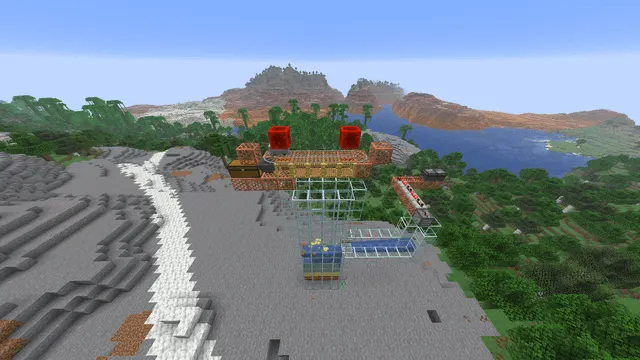
Automatic item elevators: Dropped items and boats caught in the geyser will travel upward. You can use this ability to transport items up without using hoppers or a dispenser chain. It is slower than using redstone, but it’s far cheaper to set up, as you don’t need to gather materials for repeaters or comparators. Make sure you use continuous geysers when creating automatic item elevators, so you don’t have to wait for the geyser to erupt so the items can be launched up.
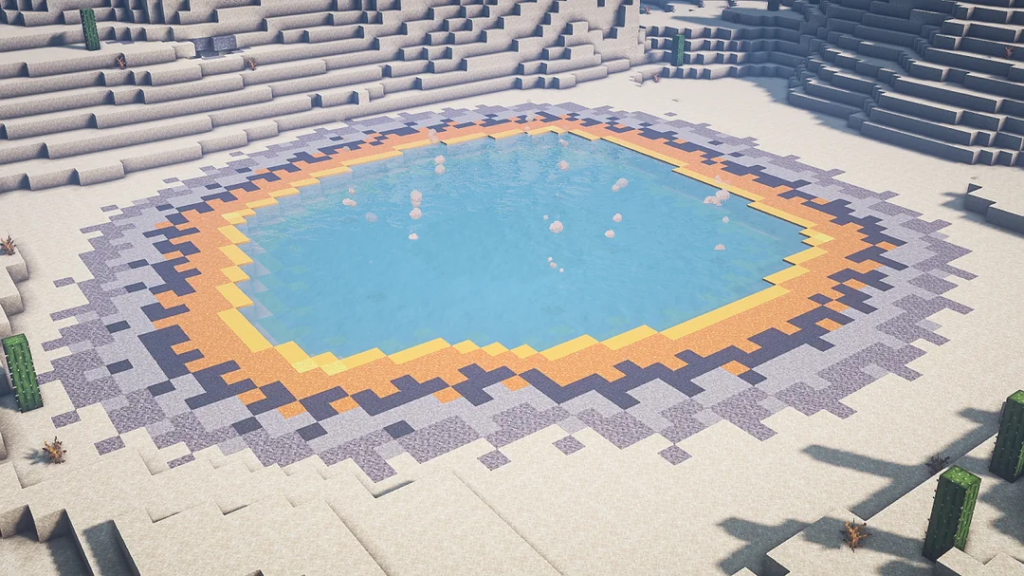
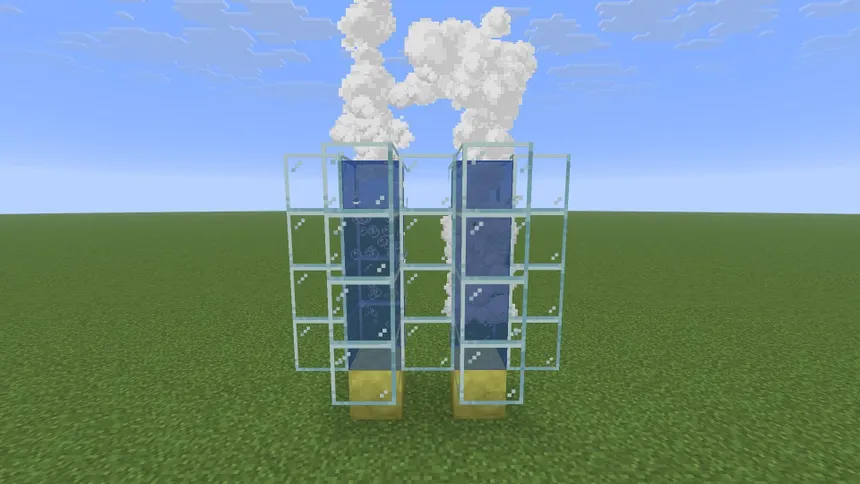
Decoration: You can use periodic geysers to create a steam engine smoke stack or a factory exhaust since the random periodic bursts make it more realistic. Since eruption timing is randomized per geyser, placing two or three near each other will naturally stagger rather than all firing in sync. You can also use it to create a dynamic waterfall by placing them at the base of a waterfall to make it more realistic, as it adds movement at the bottom.
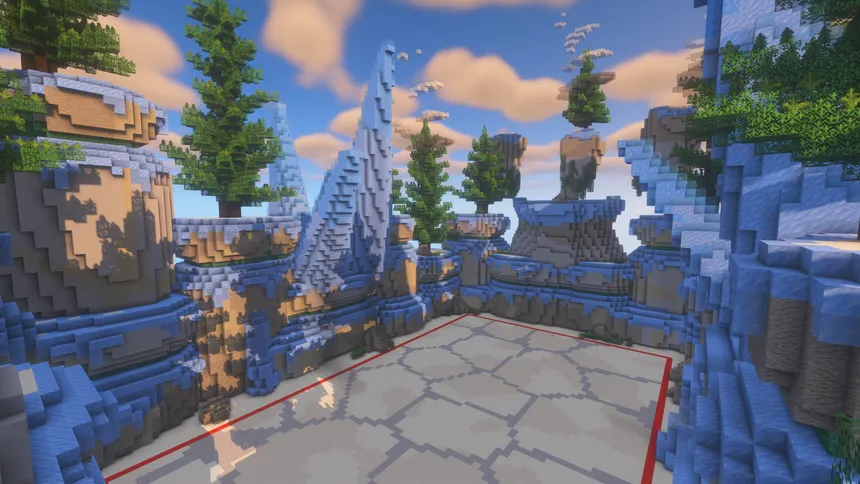
PvP Arena Hazards: You can construct a PvP arena with continuous or periodic geysers as environmental hazards in custom PvP maps to make PvP matches more interesting. Players would now have to account for their surroundings when fighting, not just their opponent.
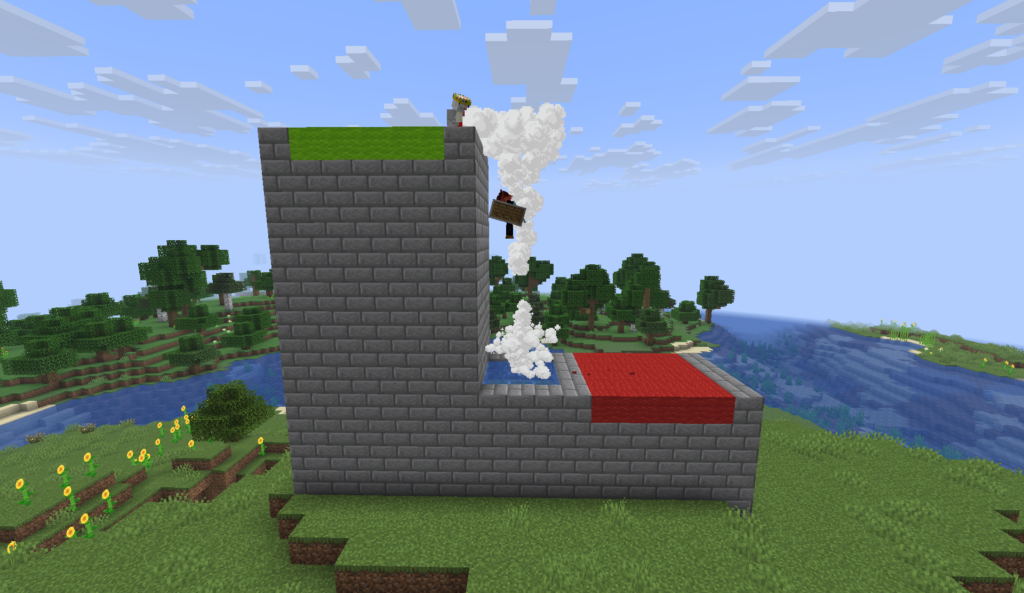
Parkour: You can use periodic geysers in parkour maps to add more of a challenge. For example, place a row of periodic geysers across a gap so players have to wait for an eruption to cross to the other side safely. You could also have them time a jump through the eruption to launch them to a platform they couldn’t otherwise get to. Since periodic geysers erupt on a randomized interval rather than a fixed timer, this adds some unpredictability as players cannot just memorize the timing of the geysers.
Frequently Asked Questions
Can I change a continuous geyser into a periodic one after building it (or vice versa)?
Yes. Since the only difference between a periodic and a continuous geyser is the source below the potent sulfur block, simply switch it from lava to a magma block to create a periodic geyser (or vice versa if you want to create a continuous geyser). You do not need to rebuild the structure.
Do periodic geysers erupt predictably?
No. Each geyser uses a randomized interval within the ranges described earlier. If you build two identical periodic geysers side by side, they will not stay in sync. There isn’t a way to force them onto a shared timer of when to erupt.
Does falling back down from a geyser deal fall damage?
Landing back in the water column you erupted from won’t cause fall damage, since you’re not landing on solid ground. Once you move away from the water, normal fall damage rules apply.
Summary
Geysers are a huge mechanic in this new update, as they can be used to create elytra launchers, item elevators, or just for decoration purposes.
To create a geyser, you’ll need the source block (either lava or magma), a potent sulfur block directly above the source block, and 1 to 4 blocks of water above that.
The source block you use determines the timing of the geyser. Picking a lava source will result in a continuous geyser, which will constantly erupt. If you choose a magma block as your source, the geyser will erupt periodically.
Increasing the depth of the water will result in a higher burst when the geyser erupts. For periodic geysers, increasing the depth will also increase the amount of time when it’s dormant.
If you would rather skip building a geyser entirely, you can find naturally generating geysers underground in sulfur caves or on the surface in sulfur springs.
If you’re looking to build geysers in the new Minecraft update on a Minecraft server with you and your friends, choose Cybrancee’s Minecraft Server Hosting. Cybrancee offers exceptional hosting with a generous 90-day money-back guarantee.
Happy building!